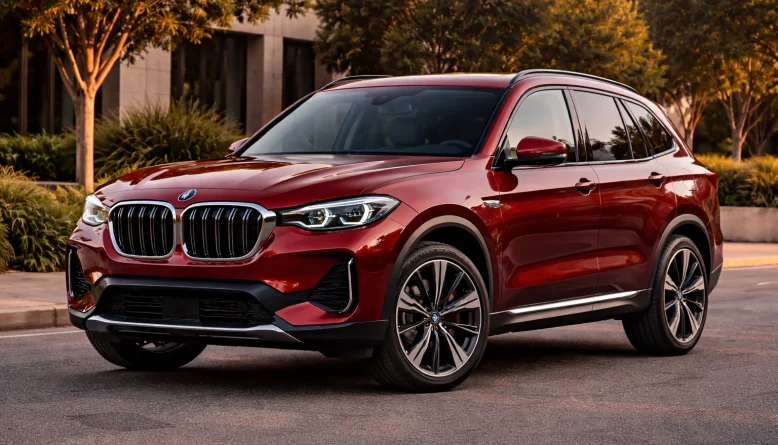
Hybrid buyers today are often less concerned with whether electrification works and more focused on whether it changes ownership outcomes in a meaningful way. The dilemma usually centers on paying for hybrid hardware without seeing consistent real-world fuel savings, or discovering that the driving experience feels less natural than a familiar gas-only alternative. The 2026 BMW X3 Hybrid lands directly in that space. It promises smoother operation and modest efficiency gains, yet it avoids the deeper behavioral changes of full or plug-in hybrids. For buyers actively cross-shopping luxury hybrids against conventional SUVs, the key question is whether this version of hybridization delivers value you will actually notice after the first few months.
Market Position and Hybrid Purpose
The 2026 BMW X3 Hybrid competes in the compact luxury SUV segment alongside vehicles such as the Lexus NX 350h, Volvo XC60 mild hybrid variants, and gas-powered alternatives like the Audi Q5. In the U.S. market, BMW does not offer a full hybrid or plug-in hybrid X3 for this model year. Instead, the X3 uses a 48-volt mild-hybrid system paired with its gasoline engines.
From a product-planning standpoint, this approach reflects BMW’s priority on maintaining familiar driving dynamics while reducing friction points in daily use. Pricing does not reflect a separate hybrid premium because the mild-hybrid system is standard equipment rather than an optional upgrade. As a result, the X3 Hybrid targets buyers who value refinement and drivability more than maximum fuel efficiency or electric-only operation.
What’s New
There are no verified hybrid-specific changes for the 2026 BMW X3 Hybrid. The current-generation X3 carries over with the same mild-hybrid architecture, engine outputs, and transmission calibrations. No updates to battery capacity, electric motor output, or EPA efficiency ratings have been announced for this model year. For owners, this lack of change reduces uncertainty and suggests predictable long-term behavior rather than early-cycle experimentation.
The Exterior
From an ownership perspective, the exterior design of the 2026 BMW X3 Hybrid prioritizes usability over statement. Visibility remains strong for the class, aided by a relatively upright seating position and manageable hood line. Wheel and tire sizes typically range from 19 to 20 inches, depending on trim and options, which helps balance ride quality with steering response.
There are no hybrid-specific exterior elements that affect daily use. Ground clearance, winter drivability, and parking ease remain identical to gas-only competitors, which matters for owners navigating urban environments or variable weather.
Real-World Driving Experience
In daily driving, the mild-hybrid system works quietly in the background. Low-speed operation benefits from smoother engine restarts and reduced hesitation when pulling away from stops. The gasoline engine remains engaged most of the time, so there is no extended electric-only driving.
Throttle blending feels natural, as the electric assist fills brief torque gaps rather than delivering a distinct propulsion phase. Regenerative braking is subtle and does not change pedal feel in a way that requires adaptation. Steering remains light at parking speeds and stable at highway speeds, while ride quality favors control over softness, which suits mixed commuting without becoming tiring.
Performance
Performance in the 2026 BMW X3 Hybrid is defined by consistency rather than novelty. The X3 30 xDrive produces 255 horsepower from its turbocharged four-cylinder engine, supported by mild-hybrid assistance. In real-world conditions, passing response and highway merges feel confident, with predictable downshifts from the eight-speed automatic.
Compared with older gas-only X3 models, acceleration feels slightly more immediate at low speeds due to electric torque fill. However, overall performance character remains familiar rather than transformed.
Hybrid Powertrain Performance and Efficiency in Daily Use
EPA estimates for the 2026 BMW X3 Hybrid list a combined fuel economy of approximately 29 mpg for the X3 30 xDrive. In real-world mixed driving, owners should expect results in the mid-to-high 20s, depending on traffic density and highway exposure.
The mild-hybrid system contributes most in stop-and-go traffic by smoothing restarts and reducing idle fuel use. On the highway, efficiency is governed largely by vehicle weight and aerodynamics, which limits the hybrid system’s impact. As a result, fuel savings are incremental and consistent rather than dramatic.
Interior Design, Ergonomics, and Hybrid-Specific Technology
The interior emphasizes familiarity and ease of use. Seating comfort is strong, with supportive cushions that hold up well over long drives. Controls are logically placed, minimizing distraction in daily operation.
There are no hybrid-specific controls that require driver input. Energy flow displays are available within the digital cluster, but they remain informational rather than operational. This simplicity benefits owners who want a conventional driving experience without additional management tasks.
Infotainment and Technology
BMW’s infotainment system remains responsive and stable in everyday use. Menu logic becomes intuitive with minimal acclimation, and wireless smartphone integration works reliably. From an ownership standpoint, the system supports daily tasks without demanding attention, which reduces cognitive load during longer drives.
Driver Assistance and Safety
Standard safety equipment includes forward collision warning, automatic emergency braking, blind-spot monitoring, and lane departure warning. Optional adaptive cruise control behaves smoothly in traffic, maintaining consistent following distances without abrupt braking.
The mild-hybrid system does not interfere with driver assistance behavior. Regenerative braking blends cleanly with adaptive cruise operation, preserving predictable deceleration in real-world use.
Ride Comfort, Noise Levels, and Long-Distance Behavior
Noise and vibration levels remain well controlled across city and highway driving. Because the gasoline engine runs consistently, there is no noticeable cycling sensation that some full hybrids exhibit. On longer trips, seat comfort and stable ride tuning help reduce fatigue, making the X3 well suited to extended highway travel.
Practicality and Everyday Hybrid Ownership Scenarios
Cargo space and rear-seat usability remain unchanged because the mild-hybrid battery does not intrude into the cabin or cargo area. This consistency benefits families and frequent travelers who rely on predictable storage capacity.
Refueling habits mirror those of gas-only SUVs. There is no need to plan charging or adjust routes, which simplifies ownership but also limits opportunities for reduced operating costs.
Trims, Options, and Pricing
For 2026, the BMW X3 lineup includes the X3 30 xDrive and the higher-performance M50 xDrive. Verified starting MSRP for the X3 30 xDrive sits in the low $50,000 range, with higher trims and options extending into the $60,000s. There is no separate hybrid trim or pricing premium, as the mild-hybrid system is standard across gasoline models.
Release Date
The 2026 BMW X3 Hybrid is currently available as part of the standard X3 lineup in the U.S. BMW has not announced a U.S.-market plug-in hybrid X3 or provided release timing for such a model.
Comparison With Direct Hybrid and Gas Competitors
Compared with the Lexus NX 350h, the 2026 BMW X3 Hybrid prioritizes driving feel and power delivery over fuel efficiency consistency. Against Volvo XC60 mild hybrid trims, the BMW offers sharper steering and more conventional drivetrain behavior with similar efficiency trade-offs. Relative to gas-only luxury SUVs, the X3 Hybrid improves refinement rather than redefining ownership costs.
Strengths, Weaknesses, and Hybrid Ownership Trade-Offs
The 2026 BMW X3 Hybrid adds value through smoother drivability, predictable performance, and low ownership complexity. Its primary compromise lies in limited fuel savings compared with full hybrids. Drivers with heavy city use may appreciate the refinement gains, while those seeking lower fuel costs may find the efficiency improvements insufficient.
Conclusion and Buyer Guidance
The 2026 BMW X3 Hybrid makes the most sense for buyers who want a traditional luxury SUV experience with subtle efficiency and refinement improvements. It suits owners who prioritize consistent performance, minimal behavioral change, and long-term familiarity. Buyers focused on maximizing fuel savings or electric driving capability may be better served by full hybrid or plug-in alternatives, while those comfortable with incremental gains will find the X3 Hybrid easy to live with over time.
No Responses Yet