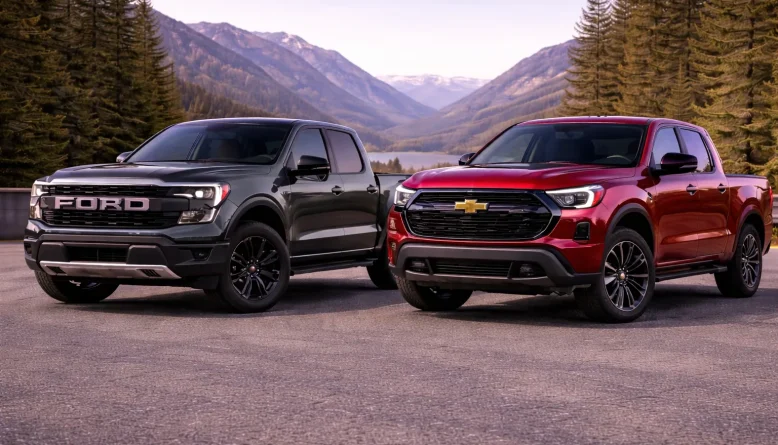
The clear takeaway from the 2026 Ford F-150 vs Chevrolet Silverado towing discussion is that both trucks remain highly capable tow vehicles, but they achieve that capability through different engineering priorities that matter in daily ownership. As of now, full and final 2026 towing ratings, payload figures, pricing, and EPA fuel economy data have not been completely released across all trims and powertrains. What can be assessed reliably is how each platform has historically behaved while towing in real-world conditions, including stability, power delivery, driver workload, and long-term ownership implications. For serious buyers cross-shopping these trucks primarily for towing, those practical differences carry more weight than peak marketing numbers.
Buyer Context and Market Positioning
Buyers researching a 2026 Ford F-150 vs Chevrolet Silverado towing comparison are usually not occasional haulers. These are owners who tow travel trailers, boats, car haulers, or work equipment several times a month and expect consistent performance rather than headline bragging rights. At the same time, the truck often doubles as daily transportation.
Both trucks sit at the core of the half-ton segment, yet they appeal to different mindsets. The F-150 positions itself as the most configurable and technology-forward tow vehicle. The Silverado emphasizes traditional truck feel, mechanical familiarity, and confidence under sustained load. When asking which should you buy, the decision often hinges on how much the driver wants the truck to actively assist versus simply feel solid and predictable.
Pricing, Trims, and Real-World Value
Official 2026 MSRP ranges and option pricing have not yet been confirmed. Historically, the Ford F-150 has offered an exceptionally broad trim and package structure, especially around towing. This allows buyers to fine-tune axle ratios, cooling packages, and towing technology without necessarily moving into luxury trims.
The Chevrolet Silverado has traditionally offered fewer towing-specific configurations but simpler decision paths. While this can limit customization, it often reduces the chance of misconfiguring a truck for towing. In real-world value terms, F-150 buyers often pay for flexibility and features, while Silverado buyers often prioritize straightforward capability at a comparable transaction price.
Powertrain, Performance, and Efficiency
Finalized 2026 powertrain and towing ratings are not yet available. Historically, the Ford F-150 has relied heavily on turbocharged engines delivering strong low-end torque. This approach benefits towing acceleration, hill climbs, and maintaining speed under load. Transmission tuning often favors keeping the engine in its torque band, even if that results in frequent gear changes.
The Chevrolet Silverado has traditionally leaned toward larger-displacement engines with a more linear power curve. Under tow, this often translates into fewer shifts and a calmer drivetrain feel. Some drivers prefer Ford’s responsiveness, while others favor Chevrolet’s steadiness. Fuel economy figures for 2026 remain unconfirmed, and real-world towing efficiency has historically depended more on trailer weight and aerodynamics than brand choice.
Ride Quality, Handling, and Driving Character
Towing confidence depends heavily on chassis behavior. The F-150 has historically delivered precise steering and strong directional control, which can be reassuring at highway speeds, especially in crosswinds. The truck tends to feel lighter and more responsive, even when towing near comfort limits.
The Silverado often feels heavier and more planted. Steering inputs are slower, but the truck conveys a strong sense of mass and stability. For long-distance towing, this can reduce driver fatigue for those who prefer a truck that feels unhurried rather than agile.
Interior Quality, Comfort, and Usability
Interior comfort matters significantly during towing, particularly on multi-hour trips. The F-150 has historically emphasized towing-focused usability, including mirror integration, logical control placement, and clear sightlines. Technology is designed to assist the driver actively while maneuvering a trailer.
The Silverado’s interior approach has favored durability and familiarity. Controls tend to be straightforward, and the cabin feels more traditionally truck-like. While it may offer fewer towing-specific interfaces, many owners appreciate the reduced cognitive load during long hauls.
Infotainment, Technology, and Driver Assistance
Technology plays a major role in modern towing. Full 2026 infotainment and towing-technology details have not yet been released for either truck.
Historically, Ford has led in trailer-focused technology, offering advanced camera views, integrated trailer profiles, and driver-assistance features designed to reduce workload. Chevrolet has taken a more restrained approach, focusing on reliability and clarity rather than feature density. Buyers should consider how much they rely on technology versus personal experience when towing.
Space, Practicality, and Daily Use
Both trucks offer competitive rear-seat space and bed dimensions, making them suitable for family use. The F-150’s wider range of cab and bed configurations allows better tailoring to specific towing and cargo needs.
The Silverado’s configurations are fewer but cover the most common use cases effectively. Over years of ownership, flexibility can matter if towing needs evolve, while simplicity can reduce long-term frustration.
Safety and Reliability Considerations
Crash-test ratings for the 2026 model year are not yet available. Both manufacturers have strong safety reputations and typically include a comprehensive set of driver-assistance features.
Reliability perceptions differ slightly. The Silverado benefits from long-running mechanical designs with extensive service history. The F-150’s broader powertrain lineup introduces more variability, meaning reliability can depend more heavily on specific configuration and maintenance. No verified data suggests a significant reliability shift for 2026 at this stage.
Ownership Costs and Long-Term Perspective
Fuel costs while towing are influenced more by trailer characteristics than truck choice. Maintenance expectations are similar, though the F-150’s greater configurability can introduce more variables over long ownership.
Depreciation has historically favored both trucks when properly equipped for towing, though resale strength often depends on regional brand loyalty. Long-term ownership satisfaction is driven by how well the truck’s towing behavior matches the owner’s preferences rather than small cost differences.
Verdict: Which Buyer Should Choose Which Car
In the 2026 Ford F-150 vs Chevrolet Silverado towing comparison, the F-150 is best suited to buyers who want maximum configurability, advanced towing technology, and a more responsive driving feel under load. The Silverado fits buyers who value traditional truck behavior, steady power delivery, and mechanical simplicity while towing.
Neither truck is universally better. The right choice depends on whether you prioritize technology-assisted towing and flexibility or a more conventional, confidence-through-mass towing experience over years of ownership.

No Responses Yet