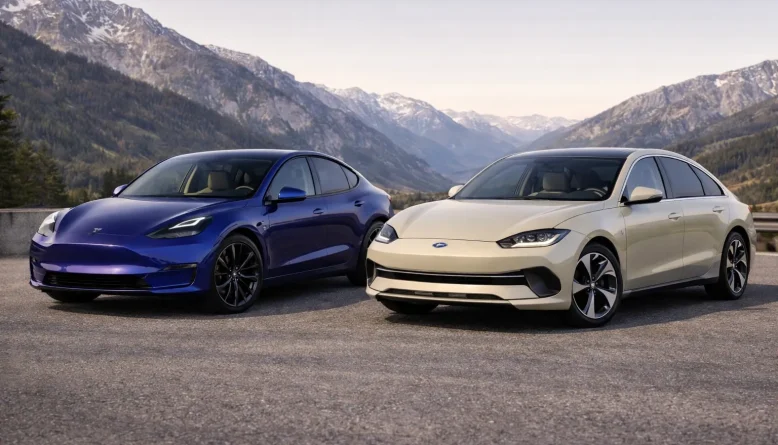
The 2024 Tesla Model 3 vs Hyundai Ioniq 6 ownership question focuses on how two similarly priced electric sedans deliver very different long-term experiences despite comparable range and performance claims. Both appeal to buyers ready to replace a gasoline sedan with a primary-use EV, yet ownership diverges around charging behavior, software maturity, interior usability, and how each car integrates into everyday routines over several years. For serious buyers already cross-shopping alternatives, this comparison matters far more in practice than headline range figures.
Buyer Context and Market Positioning
Buyers comparing the 2024 Tesla Model 3 vs Hyundai Ioniq 6 are typically tech-aware, efficiency-focused drivers moving into EV ownership for the first time or replacing an earlier electric vehicle. This is a Car A vs Car B decision in the midsize electric sedan segment, where aerodynamics, software, and charging convenience carry as much weight as comfort.
The Model 3 positions itself as the performance- and software-led choice, emphasizing simplicity, frequent updates, and integration with Tesla’s charging ecosystem. The Ioniq 6 targets buyers who want EV efficiency wrapped in a more traditional ownership framework, including familiar controls and dealership-based service. When asking which should you buy, the answer often depends on how much control you want centralized in software versus physical interaction.
Pricing, Trims, and Real-World Value
Pricing fluctuates frequently, particularly for Tesla. In the United States, the 2024 Model 3 typically starts lower than the Ioniq 6 in base rear-wheel-drive form, though incentives, market adjustments, and regional taxes can shift the equation. In Canada and Europe, pricing spreads vary by battery size and drivetrain.
The Model 3 trim structure is minimal, with price steps largely tied to drivetrain and performance. The Ioniq 6 offers a broader trim walk, pairing different battery sizes with feature packages, which allows more customization but complicates direct comparisons.
Real-world value depends on usage patterns. Buyers who road-trip frequently and rely on fast charging may extract more value from the Model 3. Those who prioritize cabin comfort, warranty coverage, and conventional service access may see stronger long-term value in the Ioniq 6.
Powertrain, Performance, and Efficiency
Both vehicles use single-motor rear-wheel-drive and dual-motor all-wheel-drive configurations, depending on trim and market. The Model 3 delivers strong acceleration even in base form, with immediate throttle response that simplifies highway merging and passing.
The Ioniq 6 feels slightly less urgent off the line but remains more than adequate for daily driving. Power delivery is smooth and predictable, which suits urban traffic and relaxed cruising.
Efficiency is a key strength for both. The Ioniq 6 benefits from an exceptionally low drag coefficient, translating to strong highway efficiency. The Model 3 also performs well, though real-world results depend heavily on speed, climate, and wheel choice. Official range ratings vary by testing standard and configuration, and direct comparisons should account for regional certification differences.
Ride Quality, Handling, and Driving Character
Driving character separates these sedans clearly. The Model 3 feels taut and responsive, with firm suspension tuning and direct steering. This contributes to confident handling but can transmit more road texture over rough pavement.
The Ioniq 6 prioritizes ride comfort. Suspension tuning absorbs imperfections more effectively, and the cabin remains calmer on broken surfaces. Steering is lighter and less communicative, which aligns with its comfort-focused mission.
At highway speeds, both are stable, though the Ioniq 6 feels more relaxed over long distances, while the Model 3 feels more engaged but less forgiving.
Interior Quality, Comfort, and Usability
Interior philosophy highlights a major ownership difference. The Model 3 relies almost entirely on a central touchscreen, eliminating most physical controls. Materials are durable but understated, and usability depends on comfort with software-driven interaction.
The Ioniq 6 offers a more traditional cabin layout. Physical buttons remain for key functions, screens are integrated without dominating the experience, and materials feel more conventional for a midsize sedan. Seat comfort is excellent, especially for long trips.
Cabin noise levels favor the Ioniq 6, particularly at highway speeds. Visibility is good in both, though the Ioniq 6’s sloping roofline slightly affects rear headroom compared to the Model 3.
Infotainment, Technology, and Driver Assistance
Technology defines the Model 3 ownership experience. Tesla’s software is fast, cohesive, and updated frequently over the air, covering navigation, charging planning, and vehicle behavior in one ecosystem.
The Ioniq 6 supports over-the-air updates for some systems, though scope and frequency vary by market. Infotainment responsiveness is good, but the experience feels more modular than Tesla’s.
Driver assistance systems are available on both, including adaptive cruise control and lane-centering. Tesla’s system integrates closely with navigation, while Hyundai’s approach is more conservative and predictable in real-world use.
Space, Practicality, and Daily Use
Both sedans offer usable rear-seat space for adults, though the Model 3 provides slightly more headroom. Cargo practicality favors the Model 3 due to its trunk layout and front trunk, which adds flexibility for daily errands.
The Ioniq 6’s trunk opening is narrower, reflecting its aerodynamic design, though total cargo volume remains adequate for most needs. Child-seat installation is straightforward in both.
Daily usability differences often come down to interface preferences rather than physical space.
Safety and Reliability Considerations
Both vehicles earn strong safety ratings where tested and include comprehensive standard safety equipment. Reliability data for the 2024 model year is still developing.
Tesla’s ownership record shows strong powertrain durability paired with inconsistent build quality experiences. Hyundai’s EV reliability data is newer but supported by a strong warranty structure in many markets.
Ownership Costs and Long-Term Perspective
Charging costs depend heavily on home charging access and electricity pricing. The Model 3 benefits from seamless integration with Tesla’s charging network, reducing planning friction for long trips. The Ioniq 6 relies on third-party networks, which vary in reliability by region.
Maintenance costs are low for both. Depreciation trends remain volatile across the EV market, influenced more by pricing changes and incentives than by vehicle fundamentals.
Verdict: Which Buyer Should Choose Which Car
The 2024 Tesla Model 3 vs Hyundai Ioniq 6 ownership decision depends on how you balance technology against comfort and familiarity. Buyers who value software integration, performance, and charging convenience will likely prefer the Model 3.
The Ioniq 6 suits buyers who want a quieter ride, more traditional controls, and a dealership-supported ownership experience. It works best for those easing into EV life without embracing a fully digital interface.
Neither choice is universally superior. The better option reflects how you plan to live with the car every day, not just how it performs on a test drive.


No Responses Yet