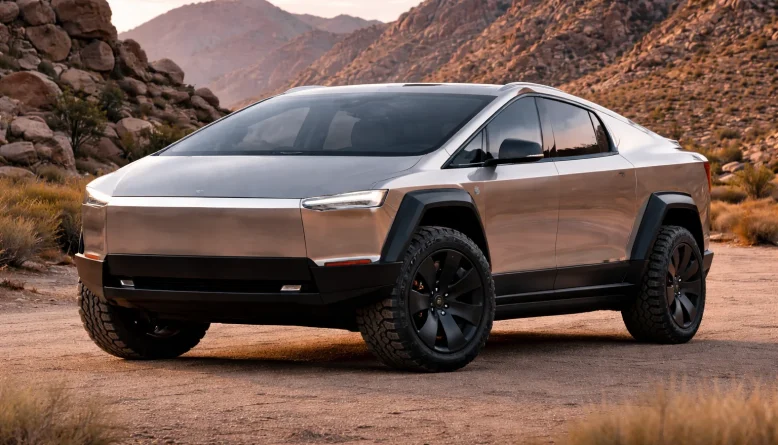
Pickup buyers usually arrive with hard questions rather than curiosity. Towing ratings compete with ride comfort. Payload numbers clash with daily drivability. Powertrain choice shapes long-term confidence when the truck spends real time under load. With the 2026 Tesla Cybertruck, those questions sharpen because buyers are not just choosing between engines or trims, but between fundamentally different ownership models. For buyers cross-shopping traditional gas-powered trucks, the Cybertruck matters now because it promises measurable advantages in some areas while introducing unfamiliar compromises in others, especially once work, towing, and daily use enter the picture.
Market Position and Purpose
The 2026 Tesla Cybertruck occupies a unique but not isolated position in the full-size pickup segment. While its design language is unconventional, its pricing and capability targets overlap directly with well-equipped gas-powered half-ton trucks. Verified pricing for currently delivered Cybertruck variants places it well above base trims of trucks like the Ford F-150 or Chevrolet Silverado, and closer to premium configurations.
From a product-planning standpoint, the Cybertruck exists to prove that an electric pickup can match or exceed traditional trucks in straight-line performance and onboard power capability. Ownership-wise, it targets buyers who want a daily-driven truck with occasional towing or recreational use, rather than fleet or heavy-duty commercial users.
What’s New
As of now, Tesla has not announced confirmed, model-year-specific mechanical updates for the 2026 Cybertruck. The currently delivered lineup includes dual-motor all-wheel drive and higher-output variants, with a rear-wheel-drive version announced but not widely delivered. No verified changes to battery capacity, suspension tuning, or towing hardware have been officially confirmed for 2026. That lack of clarity matters because truck buyers often rely on incremental refinements rather than sweeping changes.
The Exterior
From an ownership perspective, the Cybertruck’s exterior presents both advantages and trade-offs. Visibility forward is good thanks to a low cowl, but rearward visibility relies heavily on cameras due to the sail-panel design. Ride height is comparable to other full-size trucks, which aids ingress and bed access.
The stainless steel body panels resist cosmetic dents but complicate repairs and refinishing. Bed access is straightforward, with a 6-foot bed and a powered tonneau cover that integrates cleanly. However, the high bed sides and tailgate height can make manual loading more effortful compared with traditional designs.
Real-World Driving Experience
In everyday driving, the Cybertruck feels heavier than its acceleration suggests. Throttle response is immediate, particularly at low speeds, which makes stop-and-go traffic easy to manage. Steering is lighter than expected for a vehicle of this mass, though feedback remains limited.
Ride quality is firm when unloaded, reflecting the truck’s stiff suspension tuning to support payload and towing. Over broken pavement, the Cybertruck transmits more road texture than many gas-powered rivals. Braking performance is strong, aided by regenerative braking, but pedal feel can take time to acclimate to for drivers coming from conventional trucks.
Performance
Straight-line performance is one of the Cybertruck’s most verifiable strengths. Acceleration, even with the dual-motor configuration, exceeds that of most gas-powered half-ton trucks. Passing response is immediate, regardless of load, as long as battery output remains unrestricted.
Under load, performance remains consistent in short bursts. However, sustained high-speed towing or climbing places greater demands on the battery, which directly affects range rather than engine strain, shifting how owners must plan longer trips.
Powertrain Behavior and Efficiency in Daily Use
Because the Cybertruck is fully electric, traditional fuel economy comparisons do not apply directly. EPA efficiency ratings exist, but real-world ownership hinges on range consistency rather than miles per gallon. In daily commuting without towing, the Cybertruck delivers predictable efficiency, though its mass limits overall range compared with lighter electric vehicles.
When towing or hauling, energy consumption rises sharply. This is not unique to the Cybertruck, but the impact is more immediately felt because reduced range requires more frequent charging stops. Power delivery remains smooth and consistent, but ownership planning becomes more deliberate.
Interior Design, Ergonomics, and Vehicle-Specific Technology
Inside, the Cybertruck emphasizes minimalism. Seating comfort is good in the front row, with a flat floor that aids movement. Rear-seat space is adequate for adults, though not class-leading.
Control layout relies almost entirely on the central touchscreen. While this reduces physical clutter, it complicates use with gloves or while bouncing over uneven terrain. Materials feel durable, but the lack of tactile controls may frustrate owners who use their trucks for work rather than commuting.
Infotainment and Technology
Tesla’s infotainment system remains responsive and visually clear. Menu logic is deep but generally intuitive once learned. Smartphone integration is limited compared with traditional systems, as Tesla relies on native apps and connectivity.
System stability is generally strong, though over-the-air updates can change behavior over time. For truck owners, that introduces a learning curve rather than a static ownership experience.
Driver Assistance and Safety
Driver assistance features include adaptive cruise control and lane-keeping support. In highway driving, adaptive cruise performs smoothly, but trailer-specific assist features are more limited than those offered by established truck brands. Braking predictability remains strong, though towing shifts stopping distances noticeably due to vehicle mass.
Ride Comfort, Noise Levels, and Long-Distance Behavior
Noise levels are low at city speeds, with minimal drivetrain sound. At highway speeds, wind noise becomes more prominent due to the truck’s angular shape. Over long distances, the firm ride can contribute to fatigue, especially on uneven surfaces.
When towing long distances, the need to plan charging stops becomes the dominant ownership factor, outweighing ride or noise considerations.
Practicality and Everyday Pickup Truck Ownership Scenarios
The Cybertruck’s bed is usable and well integrated, with lockable storage and onboard power outlets that add real utility. Payload ratings are competitive on paper, but real-world payload use directly reduces range, which owners must account for.
For commuting, the Cybertruck is easy to live with if charging access is reliable. For home projects and recreational towing, it performs well within short to moderate distances. For frequent long-distance towing or jobsite use, ownership becomes more complex.
Trims, Options, and Pricing
Verified pricing places the dual-motor Cybertruck well above mainstream gas-powered trucks, with higher-output variants commanding a significant premium. Trim structure remains limited compared with traditional trucks, and many features are bundled rather than configurable. Final pricing and trim details for the 2026 Tesla Cybertruck have not been officially updated and should be confirmed directly with Tesla.
Release Date
Tesla has not announced a distinct release date separating the 2026 Cybertruck from current production. Ongoing deliveries suggest incremental production rather than traditional model-year rollouts.
Comparison With Direct Gas-Powered Pickup Truck Competitors
Buyers realistically cross-shop the Cybertruck with trucks such as the Ford F-150, Chevrolet Silverado 1500, and Ram 1500. Compared with these, the Cybertruck offers superior acceleration and onboard power capability, but less flexibility for long-distance towing. Gas-powered trucks retain advantages in refueling speed, repair accessibility, and established work-oriented ecosystems.
Strengths, Weaknesses, and Pickup Truck Ownership Trade-Offs
The Cybertruck excels in performance, onboard power availability, and low daily operating costs when charged at home. Its weaknesses center on range reduction under load, limited configurability, and unfamiliar repair considerations. Ownership trade-offs are not subtle; they require alignment between use case and infrastructure.
Conclusion and Buyer Guidance
The 2026 Tesla Cybertruck makes sense for buyers who want a pickup that doubles as a high-performance daily driver and who tow or haul within predictable distances. It rewards owners with charging access and flexible schedules. Buyers who rely on long-distance towing, frequent jobsite use, or rapid refueling may find a traditional gas-powered truck a more practical long-term choice.
No Responses Yet