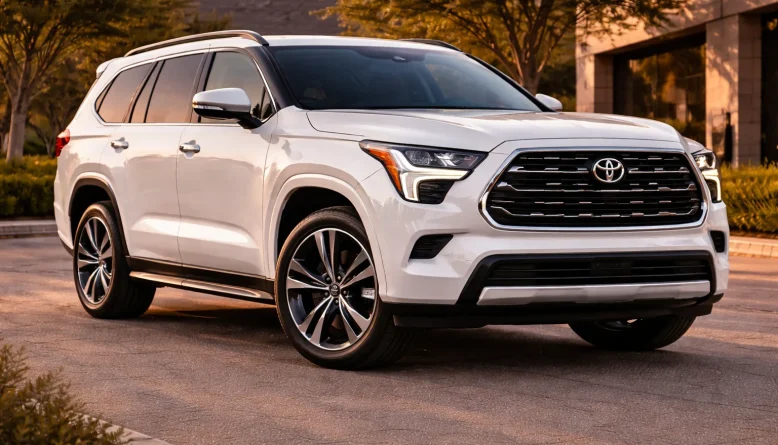
For full-size SUV buyers, the decision often comes down to power and capability versus everyday comfort and operating costs. The 2026 Toyota Sequoia Hybrid sits at the center of that dilemma. Shoppers cross-shopping it against the Chevrolet Tahoe, Ford Expedition, and Jeep Wagoneer are asking whether Toyota’s i-FORCE MAX hybrid system meaningfully improves efficiency and drivability without compromising the long-term durability and space expectations that define this segment.
Market Position and Purpose
The Toyota Sequoia occupies the full-size, body-on-frame SUV segment with a clear focus on strength, towing capability, and long-term ownership confidence. From a product-planning standpoint, the Sequoia exists to offer Land Cruiser–derived durability and Toyota reliability while adding modern technology and hybrid power to meet efficiency and emissions demands. In ownership terms, it targets families who need real space and capability but want a more advanced powertrain than traditional V8 rivals.
What’s New
As of now, Toyota has not announced confirmed updates specific to the 2026 Sequoia Hybrid. The current generation was fully redesigned for the 2023 model year, introducing the i-FORCE MAX hybrid powertrain, new interior technology, and a revised chassis. Any changes for 2026 beyond carryover equipment have not been officially released.
Exterior and Daily Usability
The Sequoia’s exterior reflects its truck-based roots. Visibility forward is strong due to the upright driving position, though the wide body and high beltline require adjustment in tight urban environments. Large wheels and aggressive tires, particularly on TRD Pro trims, enhance off-road capability but can affect ride comfort and replacement costs. In daily use, the Sequoia’s size demands space, though power-operated steps and cameras help mitigate maneuvering challenges.
Real-World Driving Experience
Despite its size, the Sequoia feels controlled in routine driving. Throttle response from the hybrid system is immediate, especially at low speeds, and steering effort remains light for parking and city use. Ride quality is firm but composed, reflecting its body-on-frame construction. Braking performance is stable, though regenerative blending can feel noticeable during gentle stops until acclimated.
Performance in Everyday Conditions
Everyday performance is a Sequoia strength. The i-FORCE MAX system pairs a twin-turbo 3.4-liter V6 with an electric motor integrated into the 10-speed automatic transmission, producing a combined 437 horsepower and 583 lb-ft of torque. In traffic and highway merging, the Sequoia accelerates with authority, even when loaded, and maintains relaxed cruising at sustained speeds.
Powertrain Behavior and Efficiency in Daily Use
Official EPA ratings for the Sequoia Hybrid stand at 21 mpg city and 24 mpg highway for rear-wheel-drive models, with four-wheel-drive versions rated at 19 mpg city and 22 mpg highway. In real-world ownership, many drivers experience combined fuel economy in the high teens to low 20s, depending on load and driving conditions. The hybrid system is self-charging, with no plug-in capability, and Toyota has not announced changes to battery capacity or hybrid hardware for 2026.
Interior Design and Ergonomics
Interior design emphasizes durability and technology over luxury softness. The driving position is commanding, controls are logically placed, and visibility remains good despite the vehicle’s height. First- and second-row comfort is strong, though the third row trades space for the hybrid battery placement, limiting cargo volume behind it. From an ownership perspective, this remains one of the Sequoia’s most significant compromises.
Infotainment and Software
The Sequoia features Toyota’s latest infotainment system with a large central touchscreen on most trims. Menu logic is straightforward, response times are competitive, and wireless Apple CarPlay and Android Auto are supported on recent models. System stability has generally been strong in daily use. Toyota has not announced software updates or interface changes for the 2026 model year.
Driver Assistance and Safety Behavior
Toyota Safety Sense features come standard across the lineup. Adaptive cruise control and lane-tracing assist operate smoothly on highways, maintaining consistent spacing and lane position without abrupt corrections. In daily driving, the systems support rather than override the driver, which reduces fatigue without creating overreliance.
Ride Comfort, Noise, and Long-Distance Use
On long trips, the Sequoia remains comfortable but not especially plush. Road and wind noise are well controlled for a body-on-frame SUV, though rough pavement can transmit some vibration through the structure. Seats provide good support for extended driving, and the hybrid system keeps engine noise subdued during steady cruising.
Ownership Costs and Practicality
Ownership costs align with other full-size SUVs, though fuel savings relative to V8 competitors can be meaningful over time. Maintenance expectations benefit from Toyota’s reputation for durability, and the hybrid system is covered under extended hybrid component warranties in many markets. Practicality is strong for passenger hauling, though cargo space limitations with the third row in place remain a daily-use consideration.
Trims, Options, and Pricing
Verified trims for the current Sequoia include SR5, Limited, Platinum, TRD Pro, and Capstone. Recent U.S. pricing has ranged from the mid-$60,000s to over $80,000 depending on trim and drivetrain. Toyota has not released confirmed 2026 pricing or trim changes, and any adjustments remain unannounced.
Release Timing
Toyota has not officially announced release timing for the 2026 Sequoia Hybrid. Historically, Sequoia model years arrive in the U.S. market toward the end of the preceding calendar year, but no confirmed schedule has been published.
Comparison With Direct Competitors
The Sequoia Hybrid competes most directly with the Chevrolet Tahoe, Ford Expedition, Jeep Wagoneer, and Nissan Armada. The domestic rivals offer larger cargo areas and optional V8 or turbocharged engines, while the Toyota differentiates itself with standard hybrid power, strong low-end torque, and long-term reliability perception.
Strengths, Weaknesses, and Trade-Offs
The Sequoia’s strengths include power delivery, towing capability, hybrid efficiency for its class, and Toyota durability. Its weaknesses center on third-row cargo space and a higher entry price than some competitors. The trade-off is choosing efficiency and torque over outright interior volume.
Conclusion and Buyer Guidance
The 2026 Toyota Sequoia Hybrid is best suited for buyers who need full-size capability, tow regularly, and value long-term reliability with improved efficiency over traditional V8 SUVs. It works well for families prioritizing power and confidence over maximum cargo flexibility. Buyers who need expansive third-row cargo space or lower upfront cost may find better alignment with non-hybrid rivals, but for hybrid-powered strength and durability, the Sequoia remains a distinctive choice.

No Responses Yet