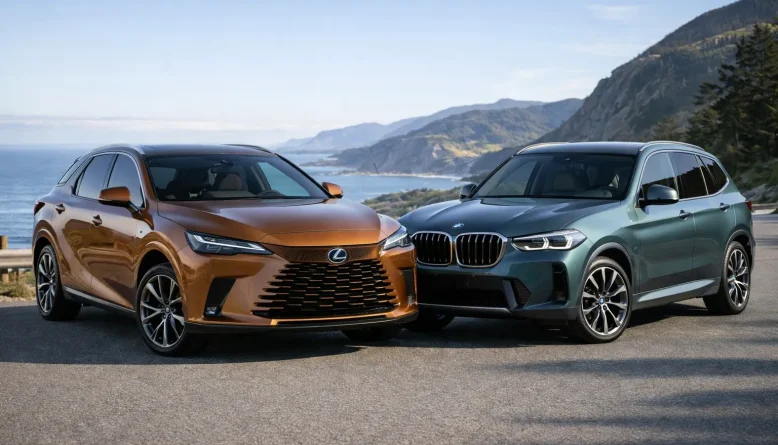
For a serious buyer weighing a 2024 Lexus RX vs BMW X3 ownership comparison, the decision is less about brand image and more about daily reality: how each SUV behaves over years of commuting, road trips, maintenance cycles, and changing needs. Both sit near the center of the premium midsize SUV conversation, yet they approach ownership from very different philosophies. The Lexus RX prioritizes long-term comfort, predictability, and low-effort ownership, while the BMW X3 emphasizes driver engagement, compact efficiency, and technology-forward performance. Understanding those differences upfront is what keeps this comparison relevant well beyond a test drive.
Buyer Context and Market Positioning
The 2024 Lexus RX vs BMW X3 comparison matters because these two vehicles often appear on the same shortlist despite not being identical in size or mission. Buyers cross-shopping them usually want a premium SUV that feels upscale without stepping into full-size territory. They value refinement, safety, and brand credibility, but they may differ on how much driving enjoyment they expect day to day.
The Lexus RX competes in the heart of the midsize luxury SUV segment and has long been a default choice for buyers prioritizing comfort, reliability reputation, and resale stability. The BMW X3, while slightly smaller and more performance-oriented, attracts buyers who still want SUV practicality but refuse to give up steering feel and chassis balance. When shoppers ask “2024 Lexus RX vs BMW X3, which should you buy,” they are often deciding whether ownership should feel effortless or engaging.
Pricing, Trims, and Real-World Value
In the U.S. market, the 2024 Lexus RX lineup carries a higher starting MSRP than the BMW X3, reflecting its larger footprint and more comfort-oriented positioning. The RX is offered with multiple powertrains, including turbocharged gasoline and hybrid variants, which influence pricing significantly. The BMW X3 range starts lower but climbs quickly as performance trims and option packages are added.
In real-world transactions, comparably equipped RX and X3 models often converge in price rather than diverge. Lexus tends to include more comfort and safety features as standard, particularly in areas like driver assistance and interior appointments. BMW relies more heavily on option packages, meaning a base X3 can feel sparse until upgraded.
From an ownership-value standpoint, RX buyers typically receive a more complete vehicle at purchase, while X3 buyers pay incrementally to tailor performance, technology, and luxury elements. Neither approach is inherently better, but it shapes how the purchase feels financially and emotionally over time.
Powertrain, Performance, and Efficiency
Powertrain philosophy is one of the clearest dividing lines in the 2024 Lexus RX vs BMW X3 ownership comparison. The Lexus RX emphasizes smoothness and efficiency, particularly in its hybrid configurations, which are designed for quiet operation and consistent fuel savings in mixed driving. Acceleration is adequate rather than aggressive, and throttle calibration favors predictability over immediacy.
The BMW X3, by contrast, delivers sharper responses across its engine lineup. Even non-M performance trims provide strong low-end torque and confident highway passing. The transmission behavior in daily driving feels more alert, which benefits drivers who value responsiveness in traffic and during merging maneuvers.
Fuel economy varies by configuration, and direct comparisons depend heavily on chosen powertrains. What remains consistent is that RX ownership prioritizes reduced stress and steady efficiency, while X3 ownership rewards drivers who notice and appreciate drivetrain behavior.
Ride Quality, Handling, and Driving Character
On the road, the Lexus RX presents a composed and relaxed demeanor. Suspension tuning favors isolation over feedback, making long highway stretches and uneven pavement less fatiguing. Body motions are well controlled for its size, but steering feel remains light and deliberately filtered.
The BMW X3 feels fundamentally different. Its chassis communicates more information through the steering wheel and seat, and it remains more planted during cornering. Ride quality stays firm but controlled, especially at highway speeds, and the vehicle feels smaller and more agile than the RX in tight urban environments.
For ownership, this distinction matters daily. RX drivers often appreciate how little effort the vehicle demands, while X3 drivers enjoy how consistently involved they feel behind the wheel.
Interior Quality, Comfort, and Usability
Interior execution reflects each brand’s priorities. The Lexus RX cabin emphasizes comfort, soft-touch materials, and a calm visual environment. Seats prioritize long-term support rather than aggressive bolstering, and cabin noise remains low at cruising speeds.
The BMW X3 interior leans toward a driver-centric layout. Materials are high quality, but the design feels more functional than indulgent. Seating position is slightly more upright and engaged, and visibility remains strong, particularly for drivers who value precise placement on the road.
Over long-term ownership, RX interiors tend to age gracefully due to conservative design and materials chosen for durability. X3 interiors appeal more to buyers who enjoy a modern, purposeful cockpit, even if it sacrifices some visual warmth.
Infotainment, Technology, and Driver Assistance
Both vehicles offer modern infotainment systems with smartphone integration, but their execution differs. Lexus focuses on clarity and stability, emphasizing consistent operation over visual flair. BMW’s system feels faster and more customizable, though it can introduce a learning curve.
Driver-assistance technology is standard across both lineups, including adaptive cruise control and lane-keeping features. In practice, Lexus systems tend to intervene smoothly and conservatively, while BMW systems allow more driver input before stepping in. Ownership experience here often comes down to personal tolerance for alerts, corrections, and system behavior during long highway drives.
Space, Practicality, and Daily Use
Space considerations subtly favor the Lexus RX. Rear-seat legroom and cargo capacity support family use, frequent passengers, and bulkier loads more comfortably. Loading height and rear-door access also benefit from the RX’s larger proportions.
The BMW X3 remains practical for daily use, but its smaller footprint shows when rear seats are occupied or cargo needs increase. For urban owners, that compactness can be an advantage, especially when parking or navigating dense traffic.
Daily usability often becomes the deciding factor in long-term satisfaction, particularly for buyers whose needs evolve after purchase.
Safety and Reliability Considerations
Both Lexus and BMW equip their vehicles with comprehensive safety features and achieve strong crash-test performance where ratings are available. Lexus continues to benefit from a long-standing reputation for reliability, supported by conservative engineering choices and predictable ownership outcomes.
BMW reliability trends depend more heavily on powertrain choice and maintenance discipline. While modern BMWs have improved significantly, ownership typically demands stricter adherence to service schedules.
Warranty coverage differs by market, but Lexus ownership often feels less uncertain for buyers planning to keep the vehicle beyond the warranty period.
Ownership Costs and Long-Term Perspective
Fuel costs, maintenance, and depreciation shape the long-term picture. Hybrid RX models offer tangible fuel savings, particularly in city driving. Maintenance costs tend to remain lower and more predictable.
The BMW X3 may cost more to maintain over time, especially as mileage increases. Depreciation varies by trim, with performance-oriented versions holding appeal but also narrowing the buyer pool.
Brand support and dealer experience can further influence satisfaction, depending on region and service quality.
Verdict: Which Buyer Should Choose Which Car
In a 2024 Lexus RX vs BMW X3 ownership comparison, there is no universal winner. Buyers who prioritize comfort, long-term reliability confidence, and a relaxed driving experience will likely find the Lexus RX better aligned with their expectations. It suits owners who value consistency and low-effort ownership above all else.
The BMW X3 suits buyers who still want practicality but refuse to give up driving involvement. It rewards attention and engagement, making everyday trips feel more purposeful.
Ultimately, the right choice depends on how you define value in ownership. This comparison highlights not which SUV is better, but which one better matches how you live with your vehicle every day.

No Responses Yet