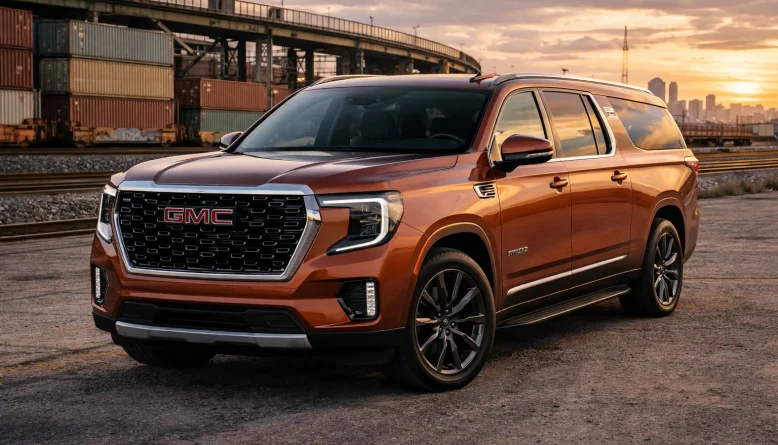
A buyer searching for a 2026 GMC Yukon XL full-size SUV review is usually confronting a clear ownership dilemma: whether the benefits of maximum interior space, towing capability, and long-distance comfort justify the high purchase price, fuel costs, and day-to-day bulk of a full-size SUV. This question often arises while cross-shopping vehicles such as the Chevrolet Suburban, Ford Expedition Max, or Toyota Sequoia, where the decision hinges less on brand loyalty and more on how much capability is genuinely needed over years of ownership.
Market Position and Purpose
The 2026 GMC Yukon XL occupies the premium end of the full-size, body-on-frame SUV segment. Its purpose is straightforward. It exists for buyers who require three adult-usable rows, substantial cargo space behind the third row, and serious towing capability, while also expecting a more upscale ownership experience than mainstream alternatives. From a product-planning standpoint, the Yukon XL differentiates itself from the Chevrolet Suburban through higher trim execution, interior materials, and feature availability, positioning it as a bridge between mass-market utility and near-luxury refinement.
What’s New
GMC has not released verified, model-year-specific updates for the 2026 GMC Yukon XL. The Yukon line received a significant refresh for the 2025 model year, including interior, technology, and feature revisions. As of now, there are no confirmed announcements detailing changes to powertrains, design, software, or pricing for 2026. Unless GMC publishes new information, the 2026 Yukon XL should be considered a carryover in terms of core specifications.
Exterior and Daily Usability
The Yukon XL’s exterior design reflects its priorities. The extended wheelbase directly benefits third-row comfort and cargo capacity, though it also defines daily ownership compromises. Visibility remains strong for a vehicle of this size, aided by a tall seating position and large windows. However, maneuvering in tight urban environments and parking garages requires planning. Wheel and tire sizes vary by trim, with higher trims favoring larger wheels that can slightly impact ride compliance. Aerodynamics are secondary to size and capability, but highway stability remains excellent.
Real-World Driving Experience
In daily driving, the Yukon XL feels more composed than its dimensions suggest. Throttle response is smooth and progressive, particularly in stop-and-go traffic. Steering is light but accurate, prioritizing ease of control over feedback. Ride quality benefits from the long wheelbase, which helps absorb uneven pavement and expansion joints. Braking performance is predictable, though the vehicle’s mass is always present during hard stops.
Performance in Everyday Conditions
Usable performance defines the Yukon XL experience. Acceleration feels confident for merging and passing, even with passengers or a trailer attached. In traffic, power delivery remains calm rather than aggressive. At sustained highway speeds, the Yukon XL settles into a relaxed, stable rhythm that favors comfort over urgency. This character suits long-distance travel far more than spirited driving.
Powertrain Behavior and Efficiency in Daily Use
The Yukon XL is offered with gasoline V8 and available diesel powertrains, depending on market and trim. GMC has not published EPA fuel economy ratings specific to the 2026 model year. Real-world efficiency expectations should therefore align with existing Yukon XL data rather than assuming improvement. Fuel consumption remains a significant ownership consideration, particularly for buyers transitioning from midsize SUVs. The diesel option, where available, continues to appeal to owners prioritizing torque and highway efficiency.
Interior Design and Ergonomics
Interior space is the Yukon XL’s defining strength. The third row offers adult-usable legroom, and cargo space behind it remains substantial. Seating comfort is tuned for long-distance travel, with wide cushions and supportive backrests. Control placement blends touchscreen-based interfaces with physical buttons for key functions. Material quality varies by trim, with higher grades delivering a noticeably more upscale environment suited to premium ownership expectations.
Infotainment and Software
Current Yukon XL models use GMC’s modern infotainment system with a large central display and digital instrumentation. Responsiveness is strong, and menu structures are relatively intuitive for a system of this complexity. Smartphone integration is supported, depending on market. GMC has not announced infotainment or software changes specific to the 2026 model year, so buyers should expect functionality consistent with recent updates.
Driver Assistance and Safety Behavior
Driver assistance systems in the Yukon XL emphasize stability and predictability. Adaptive cruise control manages speed smoothly, while lane-keeping assistance intervenes gradually rather than abruptly. These systems work best in highway conditions, where the vehicle’s size benefits from measured, conservative inputs. GMC has not released updated safety system details for 2026.
Ride Comfort, Noise, and Long-Distance Use
Long-distance comfort is a core strength of the Yukon XL. Road and wind noise are well controlled for a full-size SUV, especially on higher trims. Suspension tuning favors compliance, reducing fatigue on extended drives. The long wheelbase contributes to a composed ride that suits road trips and frequent highway use.
Ownership Costs and Practicality
Ownership costs reflect the Yukon XL’s size and positioning. Fuel, tires, and maintenance expenses exceed those of midsize SUVs, but the payoff comes in space, towing ability, and durability. Cargo capacity supports large families, pets, and gear without compromise. GMC has not published ownership cost estimates for the 2026 model year, so buyers should reference existing Yukon XL data when budgeting.
Trims, Options, and Pricing
GMC has not published confirmed trims or MSRP figures for the 2026 GMC Yukon XL. Current Yukon XL trims and pricing remain the only verified reference. Any assumptions regarding pricing changes or equipment updates for 2026 would be unconfirmed.
Release Timing
There is no officially announced release or on-sale date for the 2026 GMC Yukon XL. GMC has not provided production or launch timing specific to the 2026 model year.
Comparison With Direct Competitors
In real-world cross-shopping, the Yukon XL competes directly with the Chevrolet Suburban, Ford Expedition Max, and Toyota Sequoia. Compared with the Suburban, the GMC offers a more premium interior and trim structure. Against the Expedition Max, it emphasizes ride composure and available diesel efficiency. The Sequoia provides a hybrid powertrain but sacrifices cargo space behind the third row.
Strengths, Weaknesses, and Trade-Offs
The Yukon XL’s strengths lie in interior volume, long-distance comfort, towing capability, and upscale trim availability. Its weaknesses center on fuel consumption, purchase price, and urban maneuverability. The trade-off is clear. Buyers gain unmatched space and capability at the expense of efficiency and ease of daily parking.
Conclusion and Buyer Guidance
A 2026 GMC Yukon XL full-size SUV review ultimately comes down to honesty about needs. This vehicle is best suited for buyers who regularly use its space, towing capacity, and long-distance comfort. Those who do not consistently require full-size capability will find more efficient and manageable options elsewhere. For owners who genuinely need maximum room and premium execution in a traditional SUV format, the Yukon XL remains one of the most purpose-built choices available.
No Responses Yet