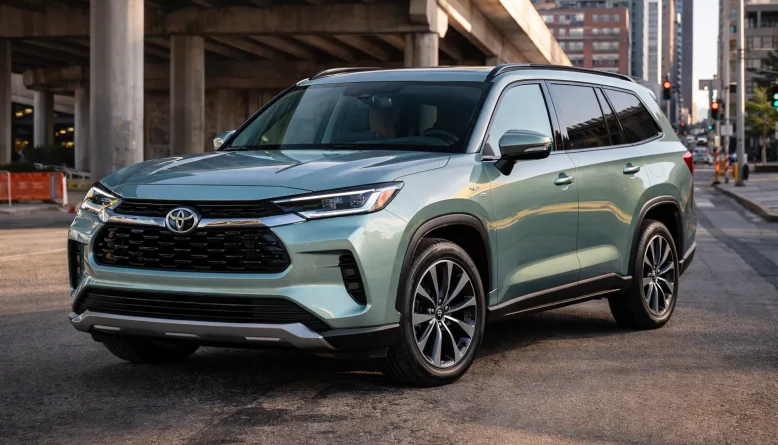
A buyer arriving at a 2026 Toyota Grand Highlander real-world review often discovers a tension that only becomes clear once this SUV is driven and lived with: the Grand Highlander’s biggest strengths—expanded interior space and hybrid efficiency—quietly work against each other in daily ownership. Toyota’s effort to stretch a midsize platform into something genuinely family-capable succeeds in packaging terms, yet that added size, weight, and capability inevitably dilute some of the efficiency and simplicity that draw buyers to Toyota in the first place. For shoppers cross-shopping the Honda Pilot, Mazda CX-90, or Lexus TX, this is less about brand loyalty and more about choosing which strengths they are willing to compromise.
Market Position and Purpose
The Toyota Grand Highlander sits at the upper edge of the midsize three-row SUV segment. It exists to solve a very specific ownership problem created by the standard Highlander: a third row and cargo area that often feel theoretical rather than usable. From a product-planning standpoint, Toyota positioned the Grand Highlander as a bridge vehicle, offering near–full-size interior usability without moving into body-on-frame fuel consumption or ownership complexity. Its purpose is not to replace full-size SUVs, but to capture families who have outgrown conventional midsize options and still value efficiency, predictable maintenance, and resale stability.
What’s New
Toyota has not released verified, model-year-specific updates for the 2026 Toyota Grand Highlander. The model remains relatively new, and as of now there are no confirmed changes to exterior design, powertrains, hybrid systems, software, safety features, trims, or pricing for the 2026 model year. In the absence of official announcements, the 2026 Grand Highlander should be considered a carryover in terms of core specifications and ownership expectations.
Exterior and Daily Usability
The Grand Highlander’s exterior proportions reflect its mission clearly. It is longer and slightly wider than the standard Highlander, which directly benefits interior space but also defines daily usability trade-offs. Visibility remains strong thanks to generous glass areas and an upright driving position, though the increased length becomes noticeable in tight parking environments. Wheel and tire sizes vary by trim, but Toyota generally favors moderate sidewall height, which supports ride comfort and lowers replacement costs. Aerodynamic efficiency prioritizes highway stability and fuel economy rather than aggressive styling.
Real-World Driving Experience
In everyday driving, the Grand Highlander feels deliberately tuned for calm operation. Throttle response is smooth and progressive, particularly in hybrid variants, which suits urban traffic and family-oriented driving patterns. Steering effort is light and predictable, making the vehicle easy to place despite its size. Ride quality emphasizes comfort over body control, absorbing broken pavement without harshness. Brake response remains linear and confidence-inspiring under normal loads.
Performance in Everyday Conditions
Usable performance defines the Grand Highlander more than acceleration metrics. In traffic, the vehicle moves confidently without feeling urgent. Highway merging and passing require moderate planning but do not feel strained. At sustained highway speeds, the Grand Highlander settles into a relaxed cruising rhythm, favoring low driver effort and stability. Buyers expecting a sporty driving experience will find the tuning conservative, but for family use, the balance feels appropriate.
Powertrain Behavior and Efficiency in Daily Use
The Grand Highlander is offered with gasoline and hybrid powertrains, depending on market. Toyota has not published EPA fuel economy ratings specific to the 2026 model year. Real-world efficiency expectations should therefore align with existing Grand Highlander data. Hybrid variants remain a key ownership draw, offering improved fuel economy without charging requirements. However, the vehicle’s increased size and weight relative to the standard Highlander mean efficiency gains are meaningful but not class-leading when compared with smaller hybrid SUVs.
Interior Design and Ergonomics
Interior packaging is where the Grand Highlander justifies its existence. The third row offers noticeably improved legroom, making it usable for adults on shorter trips rather than emergency seating. Cargo space behind the third row supports real family needs such as strollers or groceries without folding seats. Seating comfort favors firm cushioning and upright ergonomics suitable for long drives. Control placement remains intuitive, with physical controls retained for frequently used functions.
Infotainment and Software
Current Grand Highlander models use Toyota’s latest infotainment system, featuring improved responsiveness and clearer menu structures compared with earlier Toyota interfaces. Apple CarPlay and Android Auto integration are supported, depending on market. Toyota has not announced infotainment or software changes specific to the 2026 model year, so buyers should expect functionality consistent with current production vehicles rather than new features.
Driver Assistance and Safety Behavior
Driver assistance systems in the Grand Highlander operate with a conservative, predictable character. Adaptive cruise control maintains stable following distances, while lane-keeping assistance applies gradual corrections rather than abrupt interventions. These systems are tuned to reduce fatigue rather than encourage hands-off driving. Toyota has not published updated safety system behavior for the 2026 model year.
Ride Comfort, Noise, and Long-Distance Use
Long-distance comfort remains a strength. Road and wind noise are well controlled at highway speeds, contributing to a relaxed cabin environment. Suspension tuning filters sharp impacts effectively while maintaining composure on uneven surfaces. Seat comfort holds up over extended drives, reinforcing the Grand Highlander’s suitability for road trips and daily commuting.
Ownership Costs and Practicality
From an ownership perspective, the Grand Highlander balances space with efficiency better than full-size SUVs. Fuel costs, particularly with hybrid variants, remain lower than body-on-frame alternatives. Maintenance expectations align with Toyota’s conservative engineering philosophy. Interior storage solutions and cargo flexibility support daily family routines without forcing owners into a larger, more expensive vehicle class.
Trims, Options, and Pricing
Toyota has not published confirmed trims or MSRP figures for the 2026 Toyota Grand Highlander. Current trim structures and pricing remain the only verified reference. Any assumptions about pricing changes or equipment updates for the 2026 model year would be unconfirmed.
Release Timing
There is no officially announced release or on-sale date for the 2026 Toyota Grand Highlander. Toyota has not provided production or launch timing specific to the 2026 model year.
Comparison With Direct Competitors
In real-world cross-shopping, the Grand Highlander competes most directly with the Honda Pilot, Mazda CX-90, Chevrolet Traverse, and Lexus TX. Compared with these rivals, Toyota emphasizes hybrid availability, efficiency, and long-term reliability. Some competitors offer more engaging driving dynamics or premium interior materials, while the Grand Highlander counters with ownership predictability and fuel economy.
Strengths, Weaknesses, and Trade-Offs
The Grand Highlander’s strengths include usable third-row space, hybrid efficiency, and long-term ownership confidence. Its weaknesses center on conservative driving dynamics and the reality that added size reduces some efficiency advantages. The trade-off is clear: buyers gain space and flexibility at the cost of simplicity and lightness.
Conclusion and Buyer Guidance
A 2026 Toyota Grand Highlander real-world review ultimately highlights fit rather than flash. This SUV is best suited for families who genuinely need third-row usability and want hybrid efficiency without moving into a full-size vehicle. Buyers seeking engaging handling or premium-brand interiors may find better matches elsewhere. For owners prioritizing space, efficiency, and long-term reliability in a single package, the Grand Highlander remains one of the most rational choices in its segment.

No Responses Yet