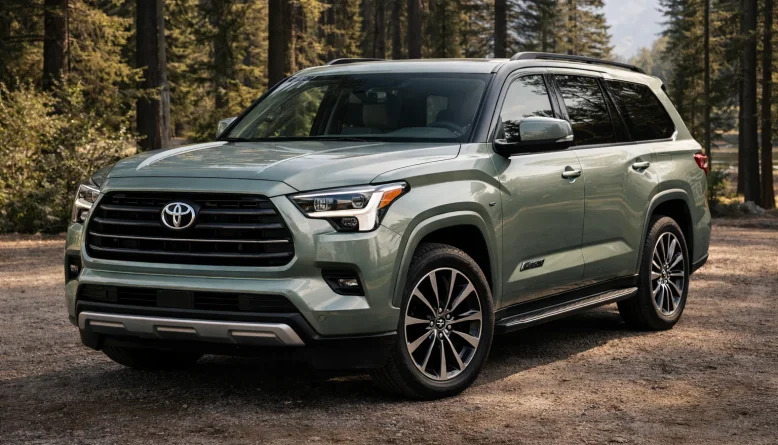
A buyer searching for a 2026 Toyota Sequoia Hybrid ownership review often starts with an assumption that deserves immediate recalibration: that a hybrid full-size SUV will meaningfully reduce fuel costs without altering the ownership experience in other ways. The Sequoia challenges that belief more than almost any hybrid on the market. While its electrified powertrain improves efficiency relative to traditional V8 rivals, the ownership reality reveals a more complex trade-off involving packaging, daily usability, and long-term operating expectations that matter far more than the word “hybrid” suggests.
Market Position and Purpose
The Toyota Sequoia sits in the full-size, body-on-frame SUV segment, competing with vehicles like the Ford Expedition and Chevrolet Tahoe. Unlike most of its rivals, the Sequoia is offered exclusively with a hybrid powertrain. From a product-planning standpoint, Toyota’s goal was not to turn the Sequoia into an efficiency leader, but to modernize performance, reduce emissions, and meet regulatory demands while preserving towing capability and durability. The Sequoia exists for buyers who want traditional full-size SUV capability paired with Toyota’s long-term reliability philosophy, rather than maximum interior volume or lowest fuel costs.
What’s New
Toyota has not released verified, model-year-specific updates for the 2026 Toyota Sequoia Hybrid. The current-generation Sequoia introduced a new platform, hybrid-only powertrain, and redesigned interior in recent model years. As of now, there are no confirmed announcements detailing changes to powertrain output, fuel economy ratings, features, software, trims, or pricing for the 2026 model year. In the absence of official information, the 2026 Sequoia Hybrid should be considered a carryover.
Exterior and Daily Usability
The Sequoia’s exterior reflects its body-on-frame roots. Its tall stance and substantial proportions deliver strong road presence and excellent forward visibility, though overall size creates daily usability considerations. Urban maneuvering and parking require attention, particularly compared to unibody SUVs. Wheel and tire sizes vary by trim, with larger wheels on higher trims affecting ride compliance slightly. Aerodynamics take a secondary role to strength and durability, but highway stability remains solid, especially at sustained speeds.
Real-World Driving Experience
In everyday driving, the Sequoia Hybrid feels more refined than older full-size SUVs, but it never disguises its mass. Throttle response is smooth, with the electric motor providing immediate low-speed assistance that improves drivability in traffic. Steering effort is light for the segment, prioritizing ease rather than feedback. Ride quality balances firmness with control, absorbing large impacts well while transmitting some road texture at lower speeds. Brake behavior remains predictable, though regenerative blending can feel noticeable during gentle stops.
Performance in Everyday Conditions
Usable performance is a clear strength. Acceleration feels confident in traffic, and highway merging requires little effort, even with passengers or gear onboard. At sustained highway speeds, the Sequoia settles into a stable, low-stress cruise. While not sporty, the hybrid powertrain delivers strong, accessible torque that suits towing and daily driving far better than traditional naturally aspirated engines.
Powertrain Behavior and Efficiency in Daily Use
The Sequoia Hybrid uses Toyota’s turbocharged hybrid system designed to prioritize torque and performance rather than maximum fuel savings. Toyota has not published EPA fuel economy ratings specific to the 2026 model year, so expectations should align with existing Sequoia Hybrid data. In real-world use, fuel economy improves compared to older V8 competitors, but it does not approach midsize hybrid SUVs. Owners benefit most during stop-and-go driving and moderate-speed cruising rather than long highway stretches.
Interior Design and Ergonomics
Interior design emphasizes durability and technology over plushness. Front-seat comfort is strong, with supportive seating suitable for long drives. The second row remains comfortable, though third-row space is more constrained than some competitors due to packaging decisions tied to the hybrid system. Cargo space behind the third row is notably limited for a full-size SUV, which directly impacts family and road-trip usability. Control placement blends touchscreen interfaces with physical controls, reducing reliance on menus for common tasks.
Infotainment and Software
The Sequoia uses Toyota’s modern infotainment system with a large central display. Responsiveness and menu logic represent a clear improvement over older Toyota systems. Apple CarPlay and Android Auto are supported, depending on market. Toyota has not announced infotainment or software changes specific to the 2026 model year, so buyers should expect functionality consistent with current Sequoia models.
Driver Assistance and Safety Behavior
Driver assistance systems operate conservatively, emphasizing smooth, predictable behavior. Adaptive cruise control maintains stable following distances, while lane-keeping assistance applies gradual corrections. These systems work best in highway conditions, reducing fatigue rather than encouraging hands-off driving. Toyota has not released updated safety system behavior for the 2026 model year.
Ride Comfort, Noise, and Long-Distance Use
On long trips, the Sequoia Hybrid delivers a composed and confident experience. Road and wind noise are well controlled for a body-on-frame SUV, though not class-leading. The suspension favors stability over isolation, which suits towing and load-carrying scenarios. Seat comfort holds up well over extended distances, making the Sequoia capable for long-haul travel despite its size-related compromises.
Ownership Costs and Practicality
Ownership costs reflect the Sequoia’s size and capability. Fuel expenses are lower than traditional V8 rivals but remain higher than unibody or midsize SUVs. Maintenance expectations align with Toyota’s reputation for durability, though hybrid system complexity adds long-term considerations. Practicality is strongest for owners who tow or drive in challenging conditions, while families prioritizing cargo flexibility may find limitations.
Trims, Options, and Pricing
Toyota has not published confirmed trims or MSRP figures for the 2026 Toyota Sequoia Hybrid. Current trim structures and pricing remain the only verified reference. Any assumptions about changes for the 2026 model year would be unconfirmed.
Release Timing
There is no officially announced release or on-sale date for the 2026 Toyota Sequoia Hybrid. Toyota has not provided production or launch timing specific to the 2026 model year.
Comparison With Direct Competitors
In real-world cross-shopping, the Sequoia Hybrid competes with the Ford Expedition, Chevrolet Tahoe, and GMC Yukon. Compared with these rivals, the Toyota emphasizes hybrid-only performance and long-term reliability. The Expedition and GM alternatives often offer more third-row cargo space and simpler packaging, while the Sequoia counters with strong low-end torque and a unified powertrain strategy.
Strengths, Weaknesses, and Trade-Offs
The Sequoia Hybrid’s strengths include strong performance, improved efficiency over traditional V8s, and Toyota’s reliability reputation. Its weaknesses center on limited cargo space behind the third row, high purchase cost, and the reality that hybrid efficiency gains are modest for its size. The trade-off favors performance and durability over maximum practicality.
Conclusion and Buyer Guidance
A 2026 Toyota Sequoia Hybrid ownership review ultimately comes down to expectations. This SUV is best suited for buyers who need towing capability, all-weather confidence, and full-size presence, and who view hybridization as a performance and refinement upgrade rather than a fuel-saving solution. Buyers prioritizing interior flexibility or lower running costs will find better options elsewhere. For those who want a modernized take on a traditional full-size SUV with Toyota durability at its core, the Sequoia Hybrid remains a distinctive, if specialized, choice.

No Responses Yet