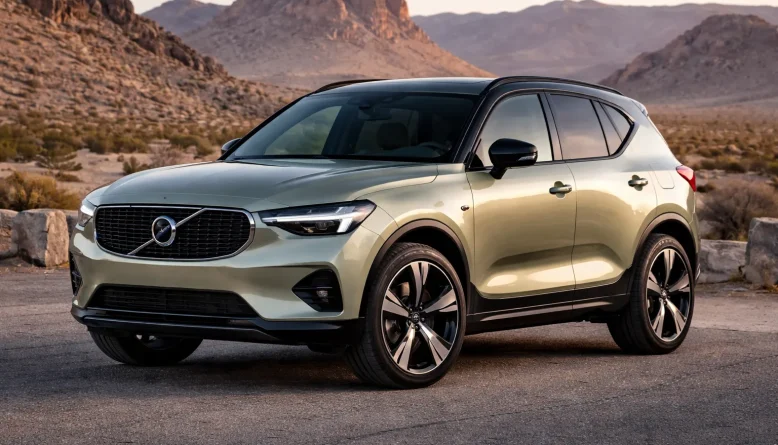
A buyer searching for a 2026 Volvo XC40 Hybrid review is usually trying to answer a deceptively simple question: does choosing Volvo’s smallest SUV with some level of electrification meaningfully reduce ownership costs and complexity, or does it introduce compromises that outweigh the benefits. This dilemma often arises when cross-shopping alternatives like the Lexus UX Hybrid, BMW X1, or Audi Q3, where efficiency gains, long-term reliability, and real-world usability matter more than outright size or brand positioning.
Market Position and Purpose
The Volvo XC40 occupies the compact luxury SUV segment, serving as an entry point into the brand for buyers who want premium design and safety without stepping up to a larger vehicle. From a product-planning standpoint, the XC40 was designed to balance urban usability with highway comfort, making it well suited to city driving and smaller households. Importantly for ownership clarity, Volvo has historically used the “Hybrid” label loosely. The XC40 has been offered primarily with mild-hybrid gasoline powertrains rather than a conventional full hybrid or plug-in hybrid system in many markets. This distinction is central to understanding what the XC40 is meant to deliver in daily use.
What’s New
As of now, Volvo has not released confirmed, model-year-specific information for a 2026 Volvo XC40 Hybrid. There are no verified announcements detailing updates to styling, powertrains, battery systems, software, or pricing for the 2026 model year. Additionally, Volvo has been transitioning naming conventions globally, including renaming some XC40 variants to EX40 or EC40 depending on powertrain. Whether the XC40 name, and any hybrid designation, will continue unchanged for 2026 has not been officially confirmed.
Exterior and Daily Usability
The XC40’s exterior design prioritizes compact proportions and upright visibility, which directly benefits daily usability. Short overhangs and a relatively tall seating position make the vehicle easy to maneuver in tight urban environments. Door openings are wide enough for practical ingress and egress, and outward visibility remains strong for the segment. Wheel and tire sizes vary by trim and market, but Volvo typically avoids extreme low-profile setups, supporting ride comfort and reducing long-term tire replacement costs. There is no confirmed information indicating exterior changes specific to a 2026 hybrid variant.
Real-World Driving Experience
Because Volvo has not confirmed a 2026 XC40 Hybrid specification, real-world driving impressions must be grounded in the behavior of existing mild-hybrid XC40 models. In daily driving, these vehicles emphasize smoothness rather than sharp response. Throttle calibration favors gradual power delivery, which works well in traffic. Steering effort is light and predictable, reinforcing ease of use rather than engagement. Ride quality remains composed over uneven pavement, particularly for a compact SUV.
Performance in Everyday Conditions
Usable performance has always been the XC40’s focus rather than outright acceleration. In urban traffic, power delivery feels sufficient and calm. Highway merging and passing require planning but do not feel strained in existing configurations. Without confirmed powertrain details for 2026, it is not possible to state whether performance characteristics will change. Buyers expecting strong hybrid-assisted acceleration should note that current XC40 mild-hybrid systems are not designed to deliver that experience.
Powertrain Behavior and Efficiency in Daily Use
Volvo has not confirmed powertrain specifications, battery capacity, or EPA fuel economy ratings for a 2026 Volvo XC40 Hybrid. Historically, XC40 “hybrid” models in many markets have used a mild-hybrid system that supports efficiency and smooth operation but does not allow electric-only driving. As such, real-world efficiency gains tend to be modest rather than transformative. Without verified 2026 data, buyers should base expectations on current mild-hybrid behavior rather than assuming full hybrid fuel savings.
Interior Design and Ergonomics
The XC40’s interior design emphasizes clean lines, good visibility, and thoughtful storage solutions. Seating comfort is strong for the front occupants, while rear-seat space is adequate for the segment but not expansive. Materials focus on durability and modern design rather than traditional luxury excess. There is no confirmed information indicating interior layout changes or hybrid-specific packaging adjustments for the 2026 model year.
Infotainment and Software
Current XC40 models use a Google-based infotainment system that integrates navigation, voice control, and app support. Responsiveness and clarity are strengths, though the system relies heavily on touchscreen interaction. Volvo has not announced software updates or interface changes specific to a 2026 XC40 Hybrid. Buyers should therefore expect functionality consistent with current models rather than new features.
Driver Assistance and Safety Behavior
Safety remains a core XC40 attribute. Driver assistance systems are tuned conservatively, favoring smooth interventions and predictable behavior. Adaptive cruise control and lane-keeping systems prioritize stability over assertiveness. Volvo has not published updated safety feature lists or behavioral changes for a 2026 XC40 Hybrid, so current system behavior should be assumed.
Ride Comfort, Noise, and Long-Distance Use
For its size, the XC40 delivers a comfortable long-distance experience. Road and wind noise are well managed at highway speeds, and suspension tuning reduces harsh impacts. While not as isolating as larger Volvo SUVs, the XC40 remains well suited for extended drives relative to most compact competitors. No hybrid-specific NVH changes have been confirmed for 2026.
Ownership Costs and Practicality
Ownership practicality is one of the XC40’s stronger arguments. Its compact size reduces fuel use and parking stress, while interior storage solutions support daily routines. Maintenance expectations for mild-hybrid systems tend to align closely with conventional gasoline vehicles, though Volvo has not released ownership cost data for the 2026 model year. Without confirmed specifications, long-term cost projections remain tied to existing models.
Trims, Options, and Pricing
Volvo has not published confirmed trims, options, or MSRP figures for a 2026 Volvo XC40 Hybrid. Current XC40 pricing and equipment structures remain the only verified reference. Any assumptions about trim changes or pricing adjustments would be unconfirmed.
Release Timing
There is no officially announced release or on-sale date for the 2026 Volvo XC40 Hybrid. Volvo has not provided guidance on production timing, naming strategy, or regional availability for the 2026 model year.
Comparison With Direct Competitors
In real-world cross-shopping, the XC40 competes with compact luxury SUVs such as the BMW X1, Audi Q3, and Lexus UX Hybrid. Compared with these rivals, the XC40 emphasizes safety systems, interior design clarity, and a calm driving experience. Its mild-hybrid approach prioritizes refinement over maximum efficiency, which may influence buyers focused on fuel savings.
Strengths, Weaknesses, and Trade-Offs
The XC40’s strengths lie in design, safety credibility, and everyday usability. Its primary weakness, from a hybrid ownership perspective, is ambiguity. The lack of a confirmed full hybrid or plug-in hybrid system limits efficiency gains. The trade-off is simplicity versus electrification depth, which buyers must weigh carefully.
Conclusion and Buyer Guidance
A 2026 Volvo XC40 Hybrid review ultimately highlights the importance of clarity over assumptions. For buyers seeking modest efficiency improvements with minimal behavioral change, the XC40’s mild-hybrid approach may still appeal. Those expecting significant fuel savings or electric-only capability should look elsewhere. Until Volvo confirms specifications and naming for 2026, the XC40 remains best evaluated as a compact luxury SUV with light electrification rather than a true hybrid solution.
No Responses Yet