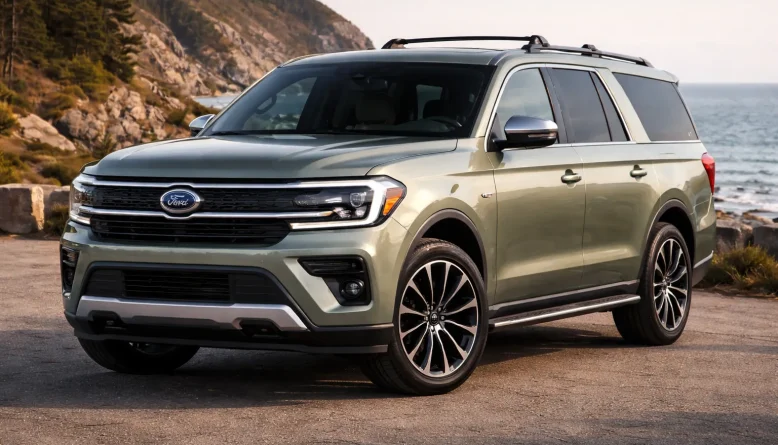
A buyer considering a 2026 Ford Expedition Max ownership review is usually facing a clear trade-off before even stepping into a dealership: unmatched interior space and towing capability versus fuel costs, maneuverability, and long-term operating expense. This decision often comes after cross-shopping vehicles like the Chevrolet Suburban, GMC Yukon XL, or Toyota Sequoia, where the question is not whether a full-size SUV is necessary, but whether living with one every day still makes sense.
Market Position and Purpose
The Ford Expedition Max sits in the full-size, body-on-frame SUV segment, positioned for buyers who need maximum passenger and cargo space without moving into commercial-duty territory. From a product-planning perspective, the Expedition Max exists to serve large families, frequent road-trippers, and owners who regularly tow while still wanting a refined, everyday-drivable vehicle. The extended-length Max variant specifically targets owners who prioritize third-row comfort and cargo volume behind that third row, areas where standard-length SUVs often fall short.
What’s New
Ford has not released verified, model-year-specific updates for the 2026 Ford Expedition Max. The Expedition lineup received significant updates for the 2025 model year, including interior and technology revisions, but there are no confirmed changes to powertrains, features, trims, or pricing for 2026. Until Ford publishes official information, the 2026 model should be considered a carryover in terms of core specifications.
Exterior and Daily Usability
The Expedition Max’s exterior design is dictated by function. Its extended length directly benefits cargo capacity and third-row usability, but it also defines daily ownership trade-offs. Visibility from the driver’s seat remains strong for the segment, aided by a tall seating position and large glass areas. However, the vehicle’s length demands awareness in tight parking lots and urban environments. Wheel and tire sizes vary by trim, though Ford generally balances appearance with ride comfort. Aerodynamics take a secondary role to size and capability, but highway stability remains a strong point.
Real-World Driving Experience
In daily driving, the Expedition Max feels more manageable than its dimensions suggest. Throttle response is smooth and predictable, which helps in stop-and-go traffic. Steering effort is light for a vehicle of this size, prioritizing ease over feedback. Ride quality remains composed, especially on highways, where the long wheelbase helps absorb expansion joints and uneven pavement. Brake feel is progressive, though stopping distances naturally reflect the vehicle’s mass.
Performance in Everyday Conditions
Usable performance is one of the Expedition Max’s strengths. Acceleration feels confident for merging and passing, even when loaded with passengers or gear. In traffic, power delivery remains relaxed rather than aggressive, which suits family-oriented use. Sustained highway speeds highlight the vehicle’s stability and low-stress character rather than urgency. This is not a sporty SUV, but it rarely feels strained in real-world conditions.
Powertrain Behavior and Efficiency in Daily Use
The Expedition Max uses Ford’s turbocharged gasoline V6 powertrain, paired with an automatic transmission. Ford has not released EPA fuel economy ratings specific to the 2026 model year, and no hybrid or electrified Expedition Max variant has been confirmed. Real-world efficiency expectations should therefore align with existing Expedition data rather than assuming improvements. Fuel consumption remains a core ownership consideration, particularly for urban driving and short trips.
Interior Design and Ergonomics
Interior space defines the Expedition Max ownership experience. The third row offers adult-usable legroom, and cargo space behind it remains substantial, even on family road trips. Seating comfort favors wide cushions and an upright posture suited to long-distance travel. Control placement is straightforward, with a mix of touchscreen and physical inputs. Material quality varies by trim, ranging from durable family-focused finishes to more premium appointments on higher grades.
Infotainment and Software
Current Expedition models use Ford’s latest infotainment system, featuring a large central display and digital driver instrumentation. Responsiveness is generally strong, and menu logic is easy to learn. Smartphone integration is supported, depending on market and trim. Ford has not announced infotainment or software changes specific to the 2026 Expedition Max, so buyers should expect functionality consistent with recent models.
Driver Assistance and Safety Behavior
Driver assistance systems in the Expedition Max emphasize stability and predictability. Adaptive cruise control manages speed smoothly, while lane-keeping assistance intervenes gradually rather than abruptly. These systems work best on highways, where the vehicle’s size and weight benefit from steady, conservative inputs. Ford has not published updated safety system details for the 2026 model year.
Ride Comfort, Noise, and Long-Distance Use
Long-distance comfort is a major strength of the Expedition Max. Road and wind noise are well controlled for a full-size SUV, especially at highway speeds. The suspension favors comfort, reducing fatigue on extended drives. Seat support remains consistent over long hours, making the vehicle well suited for cross-country travel and frequent family trips.
Ownership Costs and Practicality
Ownership costs reflect the Expedition Max’s size and capability. Fuel, tires, and routine maintenance all trend higher than midsize SUVs, but the payoff comes in space and versatility. Cargo capacity supports large families, pets, and towing-related gear without compromise. Ford has not released ownership cost estimates specific to the 2026 model year, so buyers should reference existing Expedition data when budgeting.
Trims, Options, and Pricing
Ford has not published confirmed trims or MSRP figures for the 2026 Ford Expedition Max. Current Expedition Max trims and pricing remain the only verified reference. Any assumptions about pricing changes or equipment revisions for 2026 would be unconfirmed.
Release Timing
There is no officially announced release or on-sale date for the 2026 Ford Expedition Max. Ford has not provided production or launch timing specific to the 2026 model year.
Comparison With Direct Competitors
In real-world cross-shopping, the Expedition Max competes most directly with the Chevrolet Suburban and GMC Yukon XL. Compared with these rivals, the Ford emphasizes a balance of towing capability, interior space, and technology. The Toyota Sequoia offers a hybrid powertrain but sacrifices cargo space behind the third row. The Expedition Max’s appeal remains centered on maximum usable room and traditional SUV capability.
Strengths, Weaknesses, and Trade-Offs
The Expedition Max’s strengths are clear: exceptional interior space, strong performance under load, and long-distance comfort. Its weaknesses center on fuel efficiency, parking ease, and ownership costs. The trade-off is straightforward. Buyers gain unmatched practicality at the expense of efficiency and urban convenience.
Conclusion and Buyer Guidance
A 2026 Ford Expedition Max ownership review ultimately comes down to scale and honesty about needs. This SUV is best suited for buyers who regularly use its space, tow capacity, and long-distance comfort. Those who do not consistently need full-size capability will likely find better efficiency and easier ownership elsewhere. For families and owners who genuinely require maximum room and flexibility, the Expedition Max remains one of the most purpose-built options on the market.

No Responses Yet