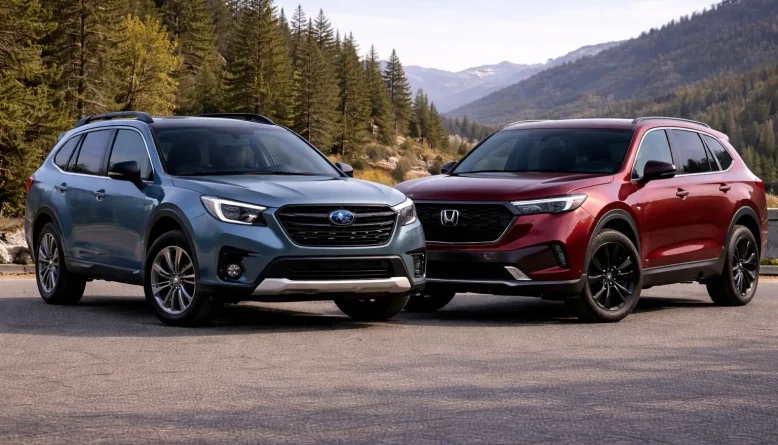
The direct answer in this 2026 Subaru Forester vs Honda CR-V comparison is that the Forester continues to prioritize all-weather confidence and visibility-driven usability, while the CR-V focuses on efficiency, interior refinement, and broad everyday appeal. As of now, complete and final 2026 specifications, pricing, and official fuel economy ratings have not been fully released for either model. Even so, both vehicles carry long-established design philosophies and ownership patterns that allow serious buyers to evaluate how each is likely to perform over years of real-world use rather than just during a test drive.
Buyer Context and Market Positioning
The buyer cross-shopping a 2026 Subaru Forester vs Honda CR-V is typically looking for a compact SUV that will serve as a long-term household vehicle. This buyer often values safety, practicality, and low ownership stress over performance or image. The comparison matters because these two models sit at the core of the global compact SUV segment and are frequently chosen by buyers planning to keep their vehicles well beyond the warranty period.
The Forester appeals strongly to buyers who live in regions with variable weather or uneven roads and want standard all-wheel drive without complexity. The CR-V targets a broader audience, including urban and suburban drivers who prioritize fuel efficiency, ride comfort, and interior versatility. When asking which should you buy, the decision often reflects environment and usage patterns more than budget alone.
Pricing, Trims, and Real-World Value
Official 2026 MSRP ranges have not yet been confirmed for either vehicle. Historically, the Forester has offered a relatively straightforward trim structure with standard all-wheel drive across the lineup. This simplifies decision-making and helps buyers avoid paying extra for drivetrain upgrades.
The CR-V has traditionally offered both front-wheel-drive and all-wheel-drive configurations, with a wider spread of trims. While this allows more customization, it can also increase the gap between base pricing and real-world transaction prices. From a value standpoint, Forester buyers often appreciate knowing that all key capability features are included upfront, while CR-V buyers may feel they get more refinement and flexibility as they move up the trim ladder.
Powertrain, Performance, and Efficiency
Final 2026 powertrain details have not been fully released. Historically, the Forester has relied on naturally aspirated four-cylinder engines paired with continuously variable transmissions, tuned for smoothness and predictability rather than quick acceleration. This setup supports steady driving in traffic and controlled behavior in low-traction conditions.
The CR-V has traditionally emphasized efficiency and responsive daily performance, particularly in city and suburban driving. Acceleration feels more immediate in typical scenarios, such as merging or passing. Fuel economy ratings for 2026 are not yet available, but past generations have generally shown the CR-V holding a modest efficiency advantage in comparable configurations.
Ride Quality, Handling, and Driving Character
Ride quality highlights a philosophical difference. The Forester’s suspension tuning and upright driving position prioritize visibility and stability. Steering is light, and the vehicle feels easy to place on narrow roads or in poor weather, which contributes to driver confidence over time.
The CR-V typically delivers a more refined on-road experience, with quieter operation and smoother responses over broken pavement. Body control feels more composed at highway speeds, making it a comfortable long-distance vehicle. Buyers should consider whether confidence in adverse conditions or overall polish matters more in daily use.
Interior Quality, Comfort, and Usability
Interior design directly affects long-term satisfaction. The Forester’s cabin has historically emphasized visibility, straightforward controls, and durable materials. While the design may feel utilitarian, it supports long ownership by minimizing complexity and wear.
The CR-V’s interior generally feels more modern and upscale, with softer materials and a more cohesive design. Seat comfort and cabin quietness tend to favor the Honda, especially on longer drives. Over years of ownership, the tradeoff becomes one of simplicity versus refinement.
Infotainment, Technology, and Driver Assistance
Infotainment and driver-assistance details for 2026 have not been fully published. Historically, Subaru has taken a conservative approach to technology updates, prioritizing stability and ease of use. Systems tend to be intuitive but less visually elaborate.
Honda has focused on improving interface responsiveness and clarity, often resulting in systems that feel more polished from day one. From a long-term ownership perspective, simpler systems may age more gracefully, while more advanced interfaces can offer greater satisfaction if reliability remains strong.
Space, Practicality, and Daily Use
Both vehicles offer competitive passenger and cargo space, but their packaging differs. The Forester’s tall roofline and large windows make the cabin feel open and accessible, which benefits loading and passenger comfort.
The CR-V counters with a well-shaped cargo area and flexible seating arrangements that support family use. Rear-seat space and child-seat friendliness are strong in both, though buyers with frequent cargo needs may notice subtle differences in loading ease and floor height.
Safety and Reliability Considerations
Crash-test ratings for the 2026 model year are not yet available. Both brands have strong safety reputations and typically include comprehensive active safety features as standard.
Reliability trends play a central role in this comparison. Subaru’s all-wheel-drive systems have a strong track record when maintained properly. Honda’s powertrains have historically delivered consistent long-term durability. There is no verified evidence suggesting a significant reliability shift for either model in 2026.
Ownership Costs and Long-Term Perspective
Fuel costs are likely to favor the CR-V slightly based on historical efficiency, though official 2026 figures are pending. Maintenance costs for both vehicles have traditionally been reasonable for the segment.
Depreciation trends often favor Subaru in regions where all-wheel drive is highly valued, while Honda benefits from broad market demand and consistent resale performance. Ownership costs ultimately depend on mileage, environment, and how long the vehicle is kept.
Verdict: Which Buyer Should Choose Which Car
In this 2026 Subaru Forester vs Honda CR-V comparison, the Forester is best suited to buyers who prioritize all-weather capability, visibility, and straightforward ownership with minimal configuration complexity. The CR-V fits buyers who value efficiency, interior refinement, and a more polished on-road experience over the long term.
Neither vehicle is the right answer for everyone. The better choice depends on where you drive, how you drive, and which qualities matter most over years of daily use rather than the first few months of ownership.

No Responses Yet