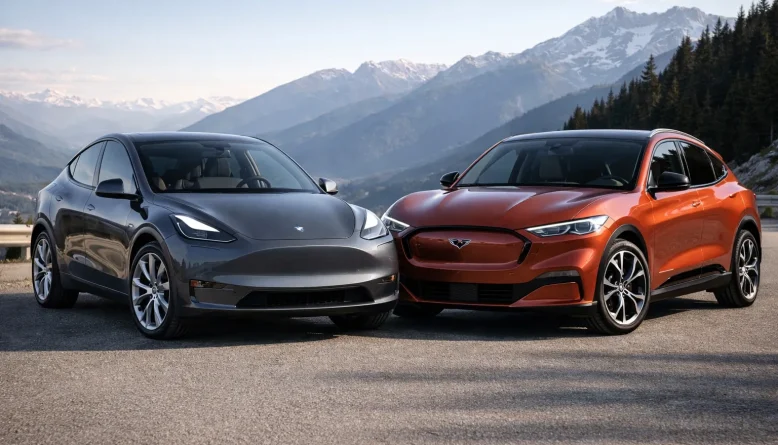
The direct answer in this 2024 Tesla Model Y vs Ford Mustang Mach-E ownership analysis is that the Model Y delivers lower friction daily ownership through charging integration, efficiency, and software simplicity, while the Mach-E offers a more conventional ownership experience with stronger dealer support and a more familiar interface for first-time EV buyers. For serious shoppers already cross-shopping these two electric crossovers, the decision is less about headline range numbers and more about how each vehicle fits into long-term, real-world ownership.
Buyer Context and Market Positioning
Buyers comparing the 2024 Tesla Model Y vs Ford Mustang Mach-E are typically committed to going electric rather than debating EV versus gas. This buyer often owns a home with charging access or plans to install it, drives regularly, and is thinking several years ahead in terms of cost, reliability, and convenience.
The Model Y is positioned as a high-volume, efficiency-focused EV designed around Tesla’s vertically integrated ecosystem. It appeals to buyers who value minimalism, frequent software updates, and a tightly controlled charging experience. The Mach-E targets buyers transitioning from traditional vehicles, offering familiar design cues, a more conventional interior layout, and access to Ford’s dealer network. When asking which should you buy, the core question becomes whether you want a tech-centric ownership model or a more traditional one adapted to electric power.
Pricing, Trims, and Real-World Value
For 2024, both vehicles span a wide pricing range depending on configuration. Tesla’s pricing strategy has been more fluid, with adjustments occurring more frequently than traditional model years. This can benefit buyers who time their purchase well but introduces uncertainty for resale planning.
The Mach-E follows a more conventional trim and pricing structure, which some buyers find easier to navigate. In real-world value terms, the Model Y often includes more standard features tied to software and charging capability, while the Mach-E may require stepping up trims for comparable equipment. Value depends less on MSRP and more on how much the buyer values ecosystem integration versus dealership access.
Powertrain, Performance, and Efficiency
Both vehicles deliver strong everyday performance, especially in city driving and highway merging, where instant torque defines the experience. The Model Y tends to feel more efficient in real-world use, particularly at highway speeds, where Tesla’s drivetrain optimization and aerodynamics show clear benefits.
The Mach-E offers competitive performance, with acceleration that feels more dramatic in certain trims. However, efficiency can vary more noticeably with driving style and configuration. Over long ownership periods, small efficiency differences can meaningfully affect charging frequency and overall convenience, even if they appear minor on paper.
Ride Quality, Handling, and Driving Character
Driving character plays a larger role in ownership satisfaction than many buyers expect. The Model Y feels light on its feet and responsive, though ride quality can be firm depending on road conditions. Steering is quick and predictable, contributing to a confident daily driving experience.
The Mach-E generally offers a more settled ride, especially over rough pavement. Its suspension tuning favors comfort over sharp response, which benefits long trips and daily commuting. Buyers who prioritize a calm, familiar driving feel may prefer the Ford, while those who enjoy a more agile character often lean toward the Tesla.
Interior Quality, Comfort, and Usability
Interior philosophy is one of the clearest ownership differences. The Model Y’s cabin is intentionally minimal, with nearly all functions routed through the central touchscreen. Some owners appreciate the simplicity and reduced clutter, while others find it increases reliance on software for basic tasks.
The Mach-E’s interior feels more conventional, with a mix of physical controls and touchscreen functionality. Seat comfort and driving position are strong, and the layout feels intuitive to drivers coming from gas vehicles. Over years of ownership, ease of use often matters more than visual novelty.
Infotainment, Technology, and Driver Assistance
Tesla’s software ecosystem is central to Model Y ownership. Over-the-air updates regularly add features or refine existing ones, which can extend the vehicle’s perceived lifespan. The interface is fast and cohesive, though it assumes comfort with touchscreen-centric operation.
Ford’s system emphasizes familiarity and integration with smartphone platforms. Updates are less frequent but tend to focus on stability rather than experimentation. Driver-assistance systems in both vehicles are competitive, though their behavior and driver expectations differ enough that test driving matters more than spec comparisons.
Space, Practicality, and Daily Use
Both vehicles offer strong cargo capacity and usable rear seating. The Model Y’s hatch and underfloor storage make it especially versatile for owners who frequently haul gear. Its low step-in height also helps with daily usability.
The Mach-E offers good passenger space and a more traditional cargo layout. Practicality differences are subtle, but Tesla’s storage solutions often prove more flexible over time, especially for owners who use the vehicle for travel or outdoor activities.
Safety and Reliability Considerations
Both vehicles perform well in safety testing and include extensive standard safety technology. Reliability discussions differ more around ownership experience than mechanical failure rates.
Tesla ownership minimizes routine service needs but relies heavily on centralized service centers, which can vary in availability by region. Ford ownership benefits from a broad dealer network, which can simplify repairs but introduces variability in EV expertise. There is no evidence suggesting a significant reliability advantage for either vehicle in 2024, but service accessibility can shape ownership satisfaction.
Ownership Costs and Long-Term Perspective
Charging costs generally favor the Model Y due to its efficiency and seamless access to Tesla’s charging network, particularly for drivers who travel frequently. Maintenance costs are low for both, though unexpected repairs can differ in cost structure.
Depreciation patterns have fluctuated, especially for Tesla due to pricing adjustments. The Mach-E’s more traditional pricing approach may offer steadier resale expectations, though market demand plays a significant role. Long-term ownership value depends on how well each ecosystem aligns with the owner’s habits and expectations.
Verdict: Which Buyer Should Choose Which Car
In this 2024 Tesla Model Y vs Ford Mustang Mach-E ownership comparison, the Model Y is best suited to buyers who value efficiency, integrated charging, frequent software updates, and a streamlined ownership experience. The Mach-E is the better choice for buyers who want a familiar driving environment, dealer support, and a more traditional transition into electric ownership.
Neither vehicle is universally better. The right choice depends on whether you want your EV ownership to feel like adopting a new technology platform or evolving from a conventional vehicle into an electric one with minimal disruption.


No Responses Yet