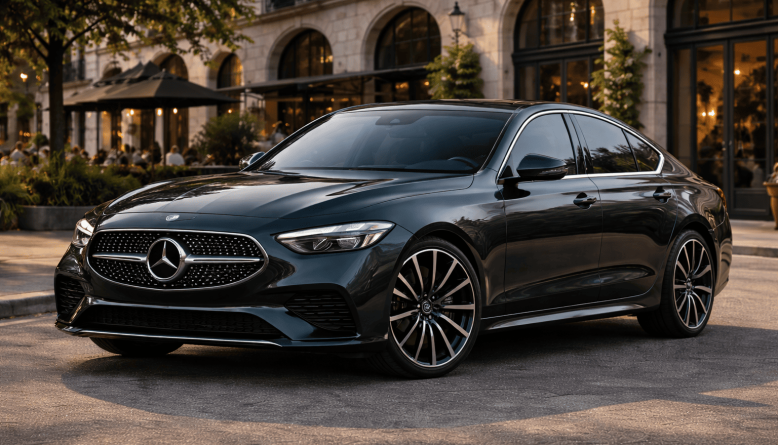
Hybrid buyers at this level rarely worry about saving fuel alone. The real question is whether the efficiency gains are worth the added cost, complexity, and potential long-term uncertainty. Luxury hybrids often promise refinement, then quietly introduce quirks that chip away at confidence over time. The 2026 Mercedes-Benz E-Class arrives in that exact moment of hesitation. It is aimed at buyers who want smoother daily driving and lower fuel use, but who refuse to sacrifice the calm, reassuring character that defines a proper executive sedan.
Overview
The 2026 Mercedes-Benz E-Class hybrid builds on the model’s long-standing reputation for comfort and composure. Rather than chasing aggressive electrification targets, Mercedes focuses on integration. The goal is simple: deliver meaningful efficiency improvements while preserving the E-Class identity that owners expect. This is a hybrid designed to feel familiar from the driver’s seat, not experimental.
What’s New
Mercedes-Benz has not announced a ground-up redesign specific to the hybrid version of the 2026 Mercedes-Benz E-Class. Updates are expected to focus on software refinement, system calibration, and incremental efficiency improvements. The emphasis remains on smoothing transitions and improving everyday usability rather than introducing headline-grabbing changes.
Exterior
The exterior design remains understated and confident. Clean surfaces and balanced proportions give the car a timeless presence. Hybrid-specific details are subtle, which suits buyers who prefer discretion over visual signaling. This still reads as an E-Class first, which reinforces its appeal in professional and personal settings.
Interior
Inside, the cabin emphasizes calm and control. The seating position is relaxed and supportive, ideal for long commutes and highway travel. Visibility is good for a sedan of this size, and rear-seat comfort remains a strength. The 2026 Mercedes-Benz E-Class hybrid continues to prioritize passenger comfort over dramatic styling gestures.
Interior & Build Quality
Build quality is consistent with Mercedes-Benz expectations. Materials feel solid, and assembly quality inspires confidence. Hybrid components are integrated without compromising cabin space or usability. Over time, this interior should hold up well, which matters for buyers planning extended ownership rather than short lease cycles.
Infotainment & Technology
The infotainment system is feature-rich but increasingly intuitive. Screen clarity is excellent, and response times are quick. Hybrid-specific displays are available but not intrusive. The system allows drivers to understand energy flow without forcing constant attention, which aligns with the E-Class focus on reduced cognitive load.
Powertrain / Hybrid System
The hybrid system in the 2026 Mercedes-Benz E-Class is tuned for seamless operation. In everyday driving, the car frequently moves under electric power at low speeds. Engine engagement is smooth and well masked, avoiding the abrupt handoffs that can undermine luxury impressions. The system favors refinement over aggressive EV-only range.
Performance
Performance remains composed and confident. Electric assistance sharpens throttle response, especially in city driving. Acceleration feels linear rather than dramatic. The added weight of the hybrid system slightly softens ultimate agility, but the car never feels sluggish or disconnected. This remains a relaxed, capable sedan rather than a sport-focused one.
Efficiency / MPG
Real-world efficiency improvements are most noticeable in urban and mixed driving. Fuel economy gains feel consistent rather than theoretical. Highway driving still relies heavily on the engine, which narrows the efficiency gap compared to non-hybrid versions. Buyers who spend significant time in traffic will benefit the most.
Driving Modes & Real-World Use
Driving modes allow the system to prioritize efficiency or comfort depending on conditions. In practice, the default mode works well enough that most drivers will never touch the settings. EV-only operation appears naturally during stop-and-go traffic, reducing noise and fuel use without requiring behavioral changes.
Safety
Safety remains a core E-Class strength. The structure feels solid, and the added hybrid components do not compromise stability. High-speed composure and predictable braking reinforce confidence, especially during long-distance travel.
Driver Assistance
Driver assistance systems are comprehensive and well integrated. Adaptive cruise control and lane support operate smoothly, reducing fatigue without feeling intrusive. These systems complement the hybrid’s relaxed character rather than competing with it for attention.
Trims, Options & Pricing
Official pricing for the 2026 Mercedes-Benz E-Class hybrid has not been announced. Expect a meaningful premium over non-hybrid variants, especially once options are added. The financial logic improves with longer ownership and frequent urban driving, where fuel savings accumulate more consistently.
Release Date
Mercedes-Benz has not confirmed an exact release date for the 2026 Mercedes-Benz E-Class hybrid. Based on manufacturer guidance and industry reporting, it is expected to arrive later in early 2026. More specific timing has not been officially verified.
Key Pros & Cons
Pros include smooth and nearly imperceptible hybrid transitions. Real-world fuel savings in city driving are consistent. Ride comfort remains a class strength. Cabin quality meets long-term ownership expectations. Throttle response benefits from electric assistance. Resale confidence remains strong in the luxury hybrid space.
Cons include a higher purchase price that takes time to justify. Efficiency gains diminish at sustained highway speeds. Added weight slightly reduces agility. Hybrid complexity may concern conservative buyers. Long-term maintenance costs could exceed non-hybrid models. Trunk packaging may be modestly affected depending on configuration.
Competitors / Rivals
Direct rivals include the BMW 5 Series hybrid variants and the Lexus ES Hybrid. Buyers cross-shopping these models typically prioritize refinement, reliability, and efficiency consistency. The 2026 Mercedes-Benz E-Class distinguishes itself by leaning more toward comfort and isolation than driving engagement.
Final Verdict
The 2026 Mercedes-Benz E-Class hybrid succeeds because it respects its audience. It delivers efficiency gains without demanding lifestyle changes or sacrificing the qualities that define the E-Class experience. For buyers who want a luxury sedan that quietly reduces fuel use while preserving long-term confidence, this hybrid feels like a carefully judged and credible step forward.

No Responses Yet