For three-row luxury SUV buyers considering a hybrid, the central dilemma is rarely about raw fuel savings alone. The real question is whether electrification meaningfully improves daily use without undermining long-distance confidence, towing capability, or long-term reliability. The 2026 Audi Q7 Hybrid sits squarely in that tension. It promises quieter short trips and reduced fuel consumption, yet it also adds cost, weight, and complexity to an already expensive vehicle. For buyers actively cross-shopping gas-only and hybrid alternatives, understanding how those trade-offs play out in real ownership matters more than headline numbers.
Market Position and Hybrid Purpose
The 2026 Audi Q7 Hybrid occupies a narrow but deliberate space in the midsize luxury SUV segment. It is positioned above the standard four-cylinder Q7 and overlaps in price with the V6-powered gas models. From a product-planning perspective, this hybrid exists to serve buyers who want a full-size-feeling cabin and three-row flexibility, but whose daily driving consists largely of short, repeatable trips where electric operation can offset fuel use.
Unlike conventional hybrids, the Q7 Hybrid is a plug-in, which means its value depends heavily on charging access. Audi does not position it as a universal replacement for the gas Q7. Instead, it targets owners who can charge at home and want reduced fuel use during the week without sacrificing road-trip range or all-weather capability on weekends.
What’s New
As of now, Audi has not released confirmed technical updates specific to the 2026 model year for the Q7 Hybrid. No verified changes to battery capacity, electric range, combined output, or trim structure have been announced. In the absence of official data, buyers should assume the powertrain and core specifications carry over from the most recently confirmed Q7 TFSI e configuration. That continuity may reassure buyers focused on proven systems rather than incremental changes.
The Exterior
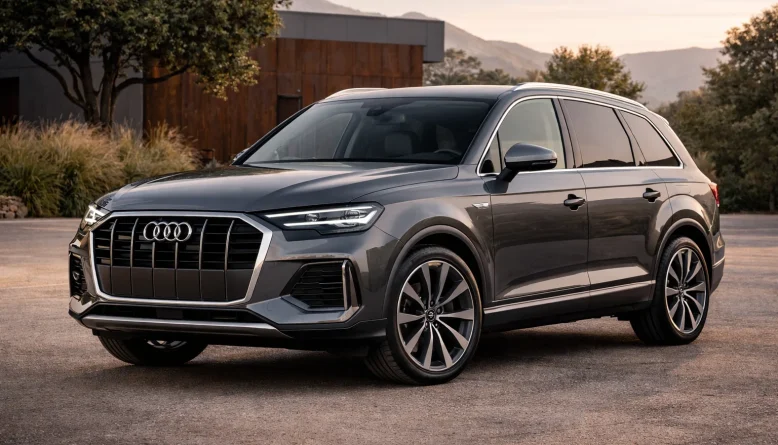
From an ownership standpoint, the Q7 Hybrid’s exterior design prioritizes familiarity and usability. Overall proportions remain upright and substantial, which benefits visibility and parking confidence for a vehicle of this size. Hybrid-specific exterior differences are minimal, limited primarily to subtle badging and the charging port.
Wheel and tire choices lean toward larger diameters, which can slightly firm up ride quality on rough surfaces. Aerodynamic considerations are secondary to cabin space and road presence, and nothing about the hybrid configuration complicates daily access, garage fitment, or charging logistics.
Real-World Driving Experience
In daily driving, the hybrid system emphasizes smoothness rather than constant electric operation. At low speeds, the vehicle can operate on electric power alone, which is most noticeable in residential areas and stop-and-go traffic. Throttle blending between electric motor and gasoline engine is generally seamless during gentle acceleration.
Under heavier inputs, the transition becomes more perceptible, though not abrupt. Regenerative braking is tuned conservatively, preserving a familiar brake pedal feel rather than maximizing energy recovery. Steering remains light and predictable, while body motions reflect the Q7’s size and weight rather than any sporty intent.
Performance
Based on previously verified specifications, the Q7 plug-in hybrid combines a turbocharged V6 with an electric motor for total output exceeding 450 horsepower in higher-output configurations. In real-world terms, that translates to confident acceleration and strong passing response, even when the battery charge is low.
The hybrid’s performance advantage over the base gas models is most evident at lower speeds, where electric torque fills in immediately. At highway speeds, performance feels comparable to the V6 gas Q7, reinforcing that this hybrid prioritizes smooth, usable power over outright speed.
Hybrid Powertrain Performance and Efficiency in Daily Use
The hybrid system delivers its greatest efficiency benefits in short, structured driving cycles. Historically, EPA-rated electric range for the Q7 TFSI e has been in the high-teens to low-20-mile range, depending on configuration. In real use, that range can cover many daily commutes if charging is consistent.
Once the battery is depleted, the vehicle operates much like a conventional V6 SUV. On highways, efficiency gains narrow significantly, and fuel economy depends more on speed and load than hybrid assistance. As a result, the 2026 Audi Q7 Hybrid rewards disciplined charging habits rather than occasional plug-ins.
Interior Design, Ergonomics, and Hybrid-Specific Technology
The interior reflects the Q7’s core strengths. Seating comfort is good across all three rows, though the third row remains best suited for occasional use by adults. Materials quality aligns with Audi’s premium positioning, and the cabin feels solidly assembled.
Hybrid-specific displays provide clear feedback on energy flow and remaining electric range without overwhelming the driver. Controls are logically placed, although reliance on touch-based inputs can require extra attention while driving.
Infotainment and Technology
Audi’s infotainment system remains responsive and visually clean. Screen transitions are smooth, and core functions are easy to access once familiar. Smartphone integration is stable and often preferable to built-in navigation for daily use. Verified owner feedback points to generally stable system behavior, with periodic software updates addressing minor issues rather than fundamental flaws.
Driver Assistance and Safety
Driver assistance systems perform predictably in real traffic. Adaptive cruise control maintains smooth following distances, while lane-centering assistance applies gentle corrections rather than aggressive steering inputs. Interaction with regenerative braking feels natural, avoiding sudden changes in deceleration. Final safety ratings and standard equipment lists for the 2026 model year have not yet been released and should be reviewed once available.
Ride Comfort, Noise Levels, and Long-Distance Behavior
Ride comfort is one of the Q7 Hybrid’s strongest attributes. The additional weight of the battery pack contributes to a settled feel over uneven pavement. Road and wind noise remain well controlled at highway speeds, and engine cycling during extended drives is unobtrusive.
On long trips, the vehicle behaves like a conventional luxury SUV, with no range anxiety once gasoline power dominates. Fatigue remains low thanks to supportive seating and stable highway manners.
Practicality and Everyday Hybrid Ownership Scenarios
Cargo space remains competitive for the segment, though battery packaging slightly reduces underfloor storage. For commuting, the ability to complete short trips on electricity can significantly reduce fuel stops. For errands and school runs, electric operation feels natural rather than forced.
On road trips, ownership mirrors that of a gas-powered Q7. Refueling frequency depends on driving style and load, and charging becomes largely irrelevant until returning home.
Trims, Options, and Pricing
Final trim availability and MSRP pricing for the 2026 Audi Q7 Hybrid have not been officially confirmed. Historically, Audi has offered the Q7 plug-in hybrid in higher trims such as Premium Plus and Prestige. Pricing has typically exceeded comparable gas-only models by a substantial margin. Buyers should verify final pricing and equipment once Audi releases official order guides.
Release Date
Audi has not announced a confirmed release date for the 2026 Audi Q7 Hybrid. Availability is expected to follow Audi’s standard model-year rollout, but buyers should rely on official announcements rather than assumptions.
Comparison With Direct Hybrid and Gas Competitors
Buyers commonly cross-shop this model against the Volvo XC90 Recharge, BMW X5 xDrive50e, and gas-powered alternatives such as the Acura MDX Type S. Compared with smaller plug-in hybrids, the Q7 Hybrid offers more space but less electric range. Against gas-only rivals, it rewards predictable daily use rather than occasional efficiency gains.
Strengths, Weaknesses, and Hybrid Ownership Trade-Offs
The hybrid system adds quiet low-speed driving and reduced fuel use for short trips. However, it also brings higher upfront cost and limited electric range relative to vehicle size. Ownership value depends heavily on access to regular charging and driving patterns that align with the system’s strengths.
Conclusion and Buyer Guidance
The 2026 Audi Q7 Hybrid is best suited for buyers who want three-row luxury capability and can consistently charge at home. It delivers meaningful benefits in daily commuting while preserving long-distance confidence and familiar driving behavior. Buyers who frequently drive long distances or lack charging access may find a gas-only Q7 or a different hybrid configuration a more rational choice.
No Responses Yet