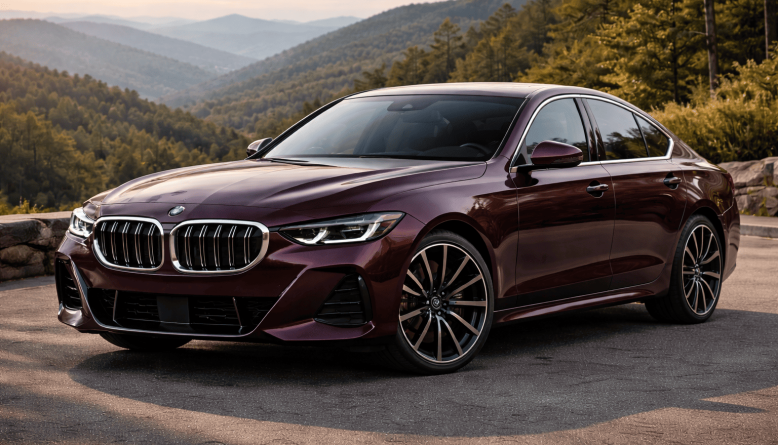
Hybrid buyers at this level face a very specific dilemma. You want lower fuel bills and quieter daily driving, but not at the cost of steering feel, power delivery, or long-term confidence. Luxury hybrids often promise efficiency, then quietly ask you to accept numbness or complexity in return. The 2026 BMW 5 Series enters this space with a clear challenge: can a hybrid executive sedan still feel like a proper BMW while justifying its price premium over the gas version? That question matters now more than ever as fuel costs fluctuate and buyers hold onto cars longer.
Overview
The 2026 BMW 5 Series hybrid continues BMW’s methodical approach to electrification. Rather than reinventing the sedan, BMW integrates hybrid technology into a familiar, well-balanced platform. This car is aimed at drivers who want measurable efficiency gains without relearning how to drive or live with their vehicle. In that sense, the hybrid 5 Series is less about novelty and more about refinement.
What’s New
BMW has not announced a clean-sheet redesign specific to the hybrid variant for the 2026 BMW 5 Series. Updates are expected to focus on software calibration, efficiency tuning, and incremental feature refinements. BMW’s recent strategy emphasizes smoother system integration rather than headline-grabbing changes, which suits buyers who value consistency over experimentation.
Exterior
The exterior design remains confident and restrained. The proportions communicate stability and presence without excess ornamentation. Hybrid-specific cues are subtle, which many buyers will appreciate. This still looks like a 5 Series first, not a statement about electrification, and that discretion fits the car’s mission well.
Interior
Inside, the cabin feels composed and purpose-driven. The driving position is low and natural, reinforcing the sedan’s executive character. Seat comfort is excellent for long distances, and visibility remains strong for a car of this size. Rear-seat space works well for adults, making the 2026 BMW 5 Series hybrid suitable for both personal and professional use.
Interior & Build Quality
Build quality continues to be a strength. Materials feel solid and carefully assembled, with no sense of cost-cutting around the hybrid components. Controls operate with precision, and nothing feels overly complicated. Over time, this interior should age gracefully, which matters when buyers plan to keep the car beyond a typical lease cycle.
Infotainment & Technology
The infotainment system emphasizes clarity and responsiveness. BMW’s interface has matured, with logical menu structures and quick reactions to inputs. Hybrid-specific information is available without being intrusive, allowing drivers to monitor efficiency without constant distraction. Over-the-air updates focus on stability rather than flashy features, which aligns with long-term ownership priorities.
Powertrain / Hybrid System
The hybrid system in the 2026 BMW 5 Series is designed to operate seamlessly. In daily driving, the car often moves under electric power at low speeds, especially in urban environments. Engine engagement is smooth and well damped, avoiding the abrupt transitions that frustrate some hybrid owners. The system prioritizes refinement over maximum electric range, which feels appropriate for this segment.
Performance
Performance remains confidently BMW. Throttle response is immediate thanks to electric assistance, and acceleration feels linear rather than staged. The added hybrid weight is noticeable only when pushed hard, and even then, the chassis remains composed. This does not feel like a compromised luxury sedan, which is a critical point for buyers upgrading from traditional gas models.
Efficiency / MPG
Real-world efficiency is where the hybrid earns its place. In mixed driving, fuel economy improvements are consistent rather than dramatic. City driving benefits the most, while highway efficiency remains solid but less transformative. Owners focused on steady fuel savings over time will find the gains meaningful, even if they are not headline-grabbing.
Driving Modes & Real-World Use
Driving modes allow the driver to prioritize efficiency or performance depending on conditions. In everyday use, most owners will leave the car in its default setting, where the system manages itself intelligently. EV-only operation appears naturally in traffic and parking scenarios, reducing noise and fuel use without requiring behavioral changes.
Safety
Safety performance remains aligned with BMW’s current standards. The structure feels solid, and the added hybrid components do not compromise confidence. Stability at speed and predictable responses contribute to a sense of security, especially during long highway drives.
Driver Assistance
Driver assistance features are tuned conservatively. Adaptive cruise control and lane support work smoothly, reducing fatigue without removing engagement. These systems feel well integrated rather than bolted on, which enhances trust over extended ownership.
Trims, Options & Pricing
Official pricing for the 2026 BMW 5 Series hybrid has not been announced. Expect a noticeable premium over non-hybrid versions, especially once options are added. The value proposition depends heavily on how long the car is kept and how much city driving it sees. Buyers planning long ownership will see the strongest return.
Release Date
BMW has not confirmed an exact release date for the 2026 BMW 5 Series hybrid. Based on current manufacturer guidance and industry reporting, it is expected to arrive later in 2025 or in early 2026. Any more precise timing has not been officially verified.
Key Pros & Cons
Pros include smooth hybrid transitions that preserve driving refinement. Real-world fuel savings in city and mixed use are consistent. Throttle response benefits from electric assistance. Interior quality remains strong despite added complexity. The car retains familiar BMW driving character. Resale confidence benefits from growing hybrid acceptance.
Cons include a higher purchase price that requires time to justify. Efficiency gains diminish at sustained highway speeds. Added weight slightly dulls ultimate handling sharpness. Hybrid complexity may concern conservative long-term owners. Trunk space may be modestly affected depending on configuration. Maintenance costs could exceed non-hybrid versions after warranty.
Competitors / Rivals
True rivals include the Mercedes-Benz E-Class hybrid variants and the Lexus ES Hybrid. Buyers cross-shopping these models typically weigh refinement, efficiency consistency, and long-term reliability rather than outright performance. The 2026 BMW 5 Series stands out by prioritizing driving feel alongside efficiency.
Final Verdict
The 2026 BMW 5 Series hybrid succeeds because it does not ask the driver to compromise core expectations. It delivers measurable efficiency gains while preserving the calm authority and responsiveness that define the 5 Series. For buyers who want a luxury sedan that quietly saves fuel without changing how it feels to drive or own, this hybrid makes a strong, rational case.

No Responses Yet