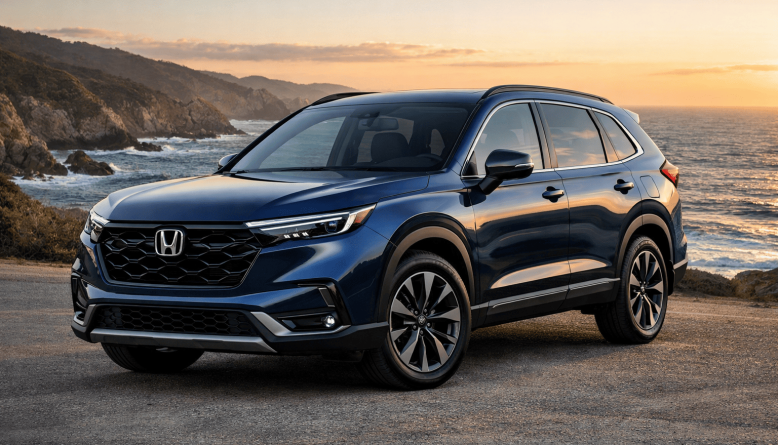
Hybrid buyers in 2026 are less concerned with chasing peak MPG and more focused on whether the numbers hold up after the novelty wears off. The 2026 Honda CR-V Hybrid speaks directly to that mindset. It promises efficiency gains without asking owners to tolerate odd driving behavior, complex controls, or uncertain long-term durability. The real question is whether this familiar hybrid formula still feels compelling as rivals push harder on performance, tech, and design.
What’s New
Changes for the 2026 Honda CR-V Hybrid are incremental rather than transformative. Honda continues to refine calibration, software logic, and feature packaging instead of reworking the core system. The hybrid powertrain remains mechanically familiar, which should reassure buyers prioritizing long-term ownership stability. Updates largely focus on smoothing daily interactions rather than adding headline features.
Exterior
The CR-V’s exterior design remains conservative by segment standards. Clean surfaces and restrained proportions help it age gracefully. Hybrid models are visually indistinguishable from gas versions, aside from subtle badging. That anonymity works in the CR-V’s favor for buyers who prefer understatement over trend-driven styling.
Interior
Inside, the cabin emphasizes openness and usability. The seating position feels natural, with clear sightlines and intuitive control placement. Rear-seat space remains a strong point, especially for adults on longer drives. Hybrid components do not intrude into passenger comfort, which keeps the interior functionally identical to non-hybrid models.
Interior & Build Quality
Material quality reflects Honda’s usual balance of durability and restraint. Touchpoints feel solid without chasing luxury pretensions. Panel fit is consistent, and the cabin resists squeaks over broken pavement. This is an interior designed to withstand years of family use rather than impress during a short test drive.
Infotainment & Technology
Honda’s infotainment system prioritizes simplicity. Menus are logically structured, and screen response is quick enough to avoid frustration. Physical controls for volume and climate remain, which reduces distraction in daily driving. Technology here supports the experience instead of dominating it.
Powertrain / Hybrid System
The 2026 Honda CR-V Hybrid uses Honda’s familiar two-motor hybrid system paired with a gasoline engine. In most scenarios, the vehicle operates electrically at low speeds, with the engine stepping in seamlessly as demand increases. Transitions are smooth, and engine noise rarely draws attention. The system feels engineered for consistency rather than maximum electric operation.
Performance
Performance is adequate but not assertive. Electric torque provides a confident initial response in city driving. Acceleration tapers off as speeds climb, reminding drivers this hybrid prioritizes efficiency over urgency. The experience feels predictable, which many buyers will prefer over sportier but less refined alternatives.
Efficiency / MPG
Real-world efficiency remains one of the CR-V Hybrid’s strongest attributes. City driving delivers the most noticeable gains, while highway efficiency stays respectable rather than exceptional. MPG results tend to be repeatable across different driving styles, which helps owners accurately estimate fuel savings over time.
Driving Modes & Real-World Use
Drive modes subtly alter throttle response but do not fundamentally change the vehicle’s character. The CR-V Hybrid excels in stop-and-go traffic, where electric operation feels most natural. Regenerative braking blends smoothly with friction braking, minimizing the learning curve for new hybrid owners.
Safety
Honda continues to prioritize standard safety equipment across trims. The CR-V Hybrid benefits from strong outward visibility and predictable handling, which complement its electronic safety systems. Passive and active safety features work together without feeling intrusive during normal driving.
Driver Assistance
Adaptive cruise control and lane-keeping assistance perform consistently on highways. The system reduces fatigue on longer trips while still encouraging driver engagement. Alerts are clear but restrained, avoiding the constant reminders that plague some competitors.
Trims, Options & Pricing
Hybrid availability is limited to mid and upper trims, which raises the entry price compared to gas models. Equipment levels are generous, reducing the need for extensive options. The price premium remains reasonable when viewed against long-term fuel savings and resale expectations.
Release Date
Honda has not announced a confirmed release date for the 2026 Honda CR-V Hybrid. Based on historical timing, it is expected to arrive in early 2026. Final timing will depend on regional production schedules.
Key Pros & Cons
The CR-V Hybrid offers smooth hybrid operation, consistent real-world fuel economy, generous rear-seat space, intuitive controls, and a reputation for long-term reliability that continues to carry weight in this segment. Ownership costs remain predictable, and resale confidence is strong.
On the downside, acceleration feels modest, styling lacks excitement, and the hybrid premium may take time to recover for low-mileage drivers. Technology features trail some newer rivals, and the driving experience favors comfort over engagement.
Competitors / Rivals
Primary rivals include the Toyota RAV4 Hybrid, Hyundai Tucson Hybrid, and Ford Escape Hybrid. Toyota emphasizes maximum efficiency and hybrid pedigree. Hyundai counters with design and technology. The CR-V Hybrid positions itself as the most balanced and least demanding option.
Final Verdict
The 2026 Honda CR-V Hybrid does not chase trends or redefine expectations. Instead, it delivers dependable efficiency, smooth behavior, and ownership confidence. For buyers who value predictability over novelty, it remains one of the safest hybrid SUV choices available.


No Responses Yet