Overview
Buying an electric sedan in 2026 is no longer about chasing the biggest screen or the quickest sprint. It is about trust. Range confidence, charging predictability, and whether the car fades into daily life instead of demanding constant attention now matter more than ever. The 2026 Volkswagen ID.7 enters this space with a calm, almost old-school promise: long range, real comfort, and fewer surprises. The challenge is convincing buyers that restraint is a virtue in a market dominated by spectacle.
What’s New
The ID.7 represents Volkswagen’s most mature EV effort to date rather than a radical departure. For 2026, software refinements and efficiency tweaks headline the updates, alongside minor interior improvements aimed at usability. The focus is on smoothing ownership friction rather than adding headline features, signaling Volkswagen’s intent to stabilize its EV strategy.
Exterior
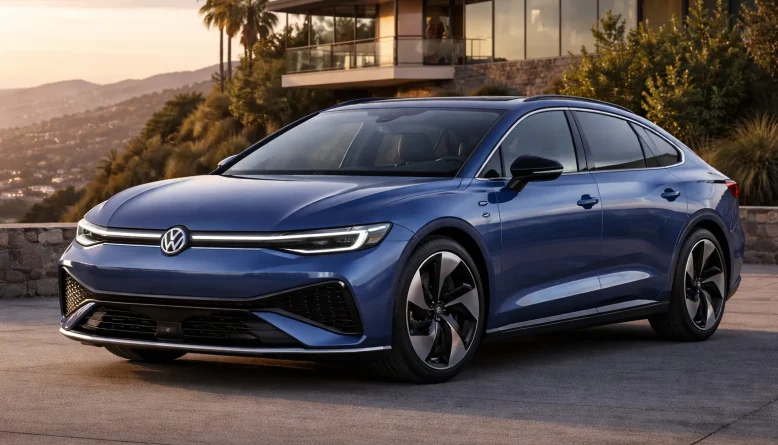
The exterior design favors aerodynamics over drama. The long roofline and clean surfaces communicate efficiency, not aggression. It looks like a modern sedan rather than a concept car escaped from an auto show. That restraint will appeal to buyers who want their EV to blend in rather than shout.
Interior
Inside, the cabin emphasizes space and calm. The floor is flat, legroom is generous, and outward visibility is excellent for an EV sedan. Seating comfort stands out on longer drives, especially for rear passengers. The ID.7 feels built for hours on the highway rather than short bursts around town.
Interior & Build Quality
Material quality is solid, if not luxurious. Surfaces feel durable and well-assembled, with fewer squeaks and rattles than earlier Volkswagen EVs. The cabin does not aim to impress at first touch, but it rewards extended use. This is a car designed to age quietly.
Infotainment & Technology
Volkswagen has taken criticism seriously here. The infotainment system is more responsive and intuitive than earlier iterations, with improved menu logic and physical shortcuts for key functions. It still lacks the immediacy of class leaders, but daily usability has improved enough to avoid frustration.
Powertrain / Motor & Battery
The 2026 Volkswagen ID.7 uses a rear-mounted electric motor paired with a large-capacity battery designed for extended range. Power delivery is smooth and predictable rather than aggressive. The emphasis is consistency, not theatrics, which aligns with the car’s long-distance mission.
Performance
Acceleration is adequate rather than thrilling. The ID.7 moves confidently in traffic and merges effortlessly at highway speeds. Steering response is tuned for stability, not sportiness. Drivers looking for engagement may find it subdued, but composure is the priority here.
Efficiency / Range
Real-world efficiency is where the ID.7 earns its credibility. Range holds up well in mixed driving, with minimal drop-off at highway speeds compared to many rivals. Cold weather still impacts range, but losses feel manageable rather than alarming. This is an EV built to reduce range anxiety through predictability.
Charging & Real-World Use
Charging performance is competitive rather than class-leading. DC fast charging is consistent, with a stable curve that favors reliability over peak numbers. Home charging integration is straightforward, and public charging sessions feel less stressful thanks to realistic range estimates and stable software behavior.
Safety
The ID.7 benefits from a rigid structure and balanced weight distribution. Safety systems operate smoothly without excessive intervention. Visibility and driver confidence remain strong, which matters more than raw safety scores in daily use.
Driver Assistance
Driver assistance features work quietly in the background. Adaptive cruise control and lane-centering systems feel natural rather than intrusive. Volkswagen avoids overpromising autonomy, which reinforces trust over time.
Trims, Options & Pricing
Trim structure is simple, with most meaningful features bundled logically. Pricing positions the ID.7 above mainstream sedans but below luxury EVs. Value depends on how much buyers prioritize range and comfort over performance or brand cachet.
Release Date
Volkswagen has not confirmed an exact on-sale date for the 2026 Volkswagen ID.7. Based on manufacturer guidance and market patterns, it is expected to arrive in early 2026.
Key Pros & Cons
The ID.7 delivers strong real-world range consistency, excellent highway comfort, predictable charging behavior, spacious rear seating, stable software performance, and a calm driving experience that reduces ownership stress.
On the downside, acceleration lacks excitement, infotainment still trails top competitors, interior materials feel conservative for the price, charging speeds are not class-leading, and resale value remains an open question for Volkswagen EVs.
Competitors / Rivals
Primary rivals include the Tesla Model 3 Long Range, Hyundai Ioniq 6, BMW i4, and Polestar 2. Most competitors emphasize performance or brand image. The ID.7 counters with space, range stability, and understated usability.
Final Verdict
The 2026 Volkswagen ID.7 is not designed to win spec-sheet comparisons or internet arguments. It succeeds by being quietly competent, predictable, and easy to live with. For buyers who want an EV that behaves like a trustworthy long-distance sedan rather than a rolling experiment, it makes a strong, sensible case.


No Responses Yet