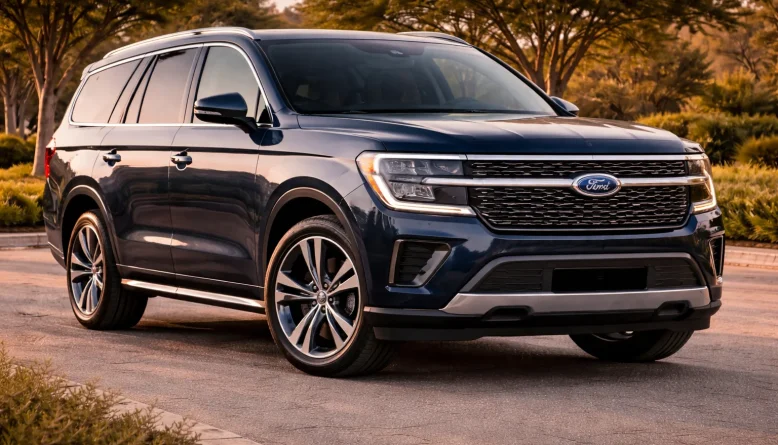
Full-size SUV ownership tends to clarify priorities quickly. Size brings space and towing confidence, yet it also brings mass that affects fuel economy, braking distances, and daily maneuverability. Turbocharged engines promise usable torque, but buyers still question long-term durability under load. The 2026 Ford Expedition matters because it sits at the intersection of those trade-offs, offering one of the most capable and refined interpretations of a traditional body-on-frame SUV while asking owners to accept the realities that come with it.
Market Position and Purpose
The 2026 Ford Expedition sits firmly in the full-size SUV segment, positioned directly against the Chevrolet Tahoe, Chevrolet Suburban, GMC Yukon, and Toyota Sequoia. It also competes closely with the extended-length Expedition Max, which targets buyers who need maximum cargo capacity without stepping into a different vehicle class.
From a product-planning standpoint, the Expedition exists to deliver truck-based capability in a family-friendly package. It prioritizes towing stability, passenger comfort, and long-distance usability over efficiency or compactness. Buyers considering it are typically stepping up from midsize SUVs or downsizing from heavy-duty trucks while still needing real capacity.
What’s New
As of now, Ford has not released confirmed, model-year-specific updates for the 2026 Ford Expedition. The most recent significant changes arrived earlier in the current generation, including interior updates, improved driver assistance systems, and refinement to suspension tuning. If the 2026 model carries over without major changes, that continuity matters because the Expedition’s mechanical package and ownership characteristics are already well established. Buyers should not expect meaningful powertrain or efficiency changes unless Ford announces them closer to launch.
The Exterior
The Expedition’s exterior design emphasizes function over subtlety. Its upright stance, large mirrors, and expansive glass area contribute to good outward visibility for a vehicle of this size. Ride height supports towing and light off-pavement use, while power-deployable running boards on higher trims help mitigate daily entry and exit challenges.
Wheel and tire choices vary by trim, with larger wheels improving appearance at the cost of ride compliance. Aerodynamic efficiency is secondary to packaging, and that choice directly influences real-world fuel consumption, particularly at highway speeds.
Real-World Driving Experience
In everyday driving, the Expedition feels substantial but composed. Throttle response from the turbocharged engine is smooth rather than aggressive, which suits urban traffic and parking maneuvers. The 10-speed automatic transmission generally shifts unobtrusively, though occasional gear hunting can appear under light throttle changes.
Steering effort is light for a vehicle of this mass, reducing fatigue in daily use. Body control is well managed for a full-size SUV, especially on trims equipped with adaptive suspension. Braking behavior is predictable and confidence inspiring, even with passengers or cargo onboard.
Performance
Performance is one of the Expedition’s practical strengths. The standard 3.5-liter twin-turbocharged V6 produces 380 horsepower, while higher-output versions deliver up to 400 horsepower depending on trim. In real-world conditions, acceleration feels strong and consistent, particularly during highway merging and passing.
Under load, the turbocharged power delivery maintains confidence better than many naturally aspirated rivals. Elevation changes and headwinds have less impact on performance, which matters for owners who tow or travel long distances regularly.
Powertrain Behavior and Efficiency in Daily Use
EPA fuel economy ratings for the Expedition typically fall in the high-teens combined, depending on drivetrain and wheel size. In real-world driving, owners often see results close to EPA figures in mixed use, with highway efficiency benefiting from the turbocharged engine’s ability to maintain speed at lower revs.
Stop-and-go driving exposes the vehicle’s mass more clearly, with fuel consumption rising accordingly. The powertrain behaves consistently and predictably, which supports long-term ownership confidence even if efficiency is not a strong selling point.
Interior Design, Ergonomics, and Vehicle-Specific Technology
Inside, the Expedition emphasizes comfort and usability. Seating is supportive in the first two rows, with wide cushions and an upright driving position that suits long trips. The third row is genuinely adult-usable, and access is straightforward thanks to wide door openings.
Control layout balances touchscreen functionality with physical buttons for frequently used functions. Materials quality improves noticeably in higher trims, though even lower trims focus on durability and ease of cleaning rather than visual flair. Driver visibility remains a strong point.
Infotainment and Technology
Ford’s infotainment system is responsive and logically structured. Menu navigation is intuitive, and smartphone integration works reliably, reducing reliance on built-in navigation. Voice controls handle common tasks effectively. Long-term owner feedback has generally been positive regarding system stability, especially compared with earlier Ford systems.
Driver Assistance and Safety
Driver assistance features such as adaptive cruise control and lane-centering assistance are widely available. In real-world use, adaptive cruise maintains smooth following distances, while lane-centering performs best on well-marked highways. In a vehicle this large, the systems are tuned conservatively, prioritizing stability and predictability over aggressive corrections. Braking behavior remains consistent, even when the vehicle is fully loaded.
Ride Comfort, Noise Levels, and Long-Distance Behavior
Ride comfort is a core strength of the Expedition. The suspension absorbs highway imperfections well, and the long wheelbase contributes to a settled feel over uneven surfaces. Wind and road noise are present but controlled at cruising speeds.
Engine sound under load is muted for a turbocharged V6, with less traditional engine note than V8 rivals but reduced strain during sustained climbs. Over long distances, seating comfort and stable behavior help reduce driver fatigue.
Practicality and Everyday SUV Ownership Scenarios
Cargo capacity is generous, particularly in the Expedition Max, which offers class-leading space behind the third row. Even the standard-length Expedition provides usable cargo room with all seats in place.
Ingress and egress are manageable with running boards, though urban parking requires attention due to vehicle length. Daily commuting is feasible but fuel stops are frequent compared with smaller SUVs. Towing capability is a major advantage, with properly equipped Expeditions rated to tow up to approximately 9,300 pounds, depending on configuration.
Trims, Options, and Pricing
The Expedition lineup typically includes trims such as XL, XLT, Limited, Timberline, King Ranch, and Platinum. Pricing in recent model years has started in the mid-$50,000 range and extended into the mid-$70,000s for higher trims. Official MSRP pricing for the 2026 Ford Expedition has not yet been released and should be verified once Ford publishes updated order guides.
Release Date
Ford has not announced a confirmed release date for the 2026 Expedition. Availability is expected to follow Ford’s standard model-year rollout schedule, but buyers should rely on official announcements rather than assumptions.
Comparison With Direct Gas-Powered SUV Competitors
Buyers typically cross-shop the Expedition with the Chevrolet Tahoe, Chevrolet Suburban, GMC Yukon, and Toyota Sequoia. Compared with the Tahoe, the Expedition offers stronger turbocharged performance and higher towing ratings. Against the Sequoia, it trades hybrid efficiency for greater powertrain flexibility and lower entry pricing. The Suburban offers more cargo space, while the Expedition balances size with slightly easier maneuverability.
Strengths, Weaknesses, and SUV Ownership Trade-Offs
The Expedition’s strengths include strong towing capability, comfortable ride quality, and a powerful, flexible powertrain. Its weaknesses center on fuel consumption, large-vehicle maneuverability, and higher operating costs. Ownership trade-offs favor capability and comfort over efficiency and simplicity.
Conclusion and Buyer Guidance
The 2026 Ford Expedition makes sense for buyers who need a full-size SUV’s towing strength and interior space without moving into a commercial or heavy-duty platform. It rewards owners who travel long distances, tow regularly, or carry passengers frequently. Buyers prioritizing fuel efficiency, lower operating costs, or easier urban maneuverability may find better fits in smaller SUVs. For traditional, capability-focused SUV ownership, however, the Expedition remains a compelling and well-rounded option.

No Responses Yet