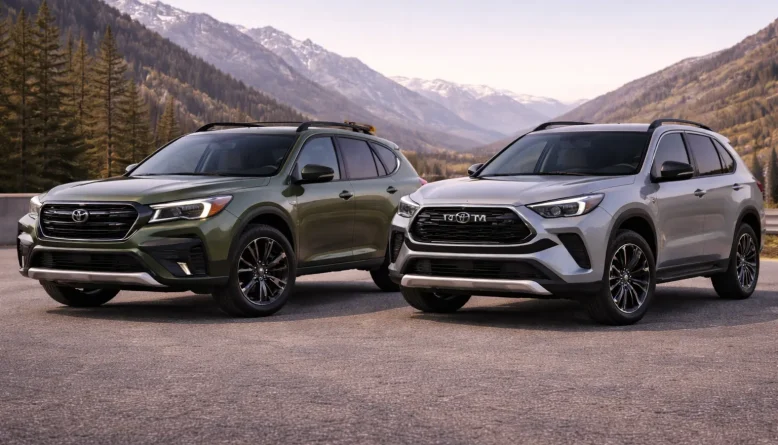
A clear answer to the 2026 Subaru Outback vs Toyota RAV4 comparison is that these two vehicles serve overlapping needs but diverge in how they prioritize everyday usability, all-weather confidence, and long-term ownership logic. As of now, full and final 2026 specifications, pricing, and EPA fuel economy ratings have not been completely released for either model. What can be evaluated with confidence is how each nameplate has historically approached design, powertrain strategy, and ownership costs. Those established patterns are highly relevant for buyers already cross-shopping these two vehicles and deciding which platform better aligns with real-world use rather than brochure positioning.
Buyer Context and Market Positioning
The buyer comparing the 2026 Subaru Outback vs Toyota RAV4 is usually less concerned with image and more focused on function. This is often a household that needs year-round capability, predictable reliability, and space for daily life without moving into a larger or more expensive vehicle class. The comparison matters because, while both compete broadly in the compact-to-midsize crossover space, they solve the same problems in different ways.
The Outback continues to blur the line between wagon and crossover, appealing to buyers who value a lower center of gravity and standard all-wheel drive. The RAV4, by contrast, sits squarely in the mainstream compact SUV segment, targeting buyers who want efficiency, familiarity, and wide trim availability. When asking which should you buy, the decision often comes down to driving environment and long-term ownership priorities rather than size alone.
Pricing, Trims, and Real-World Value
Official 2026 MSRP ranges have not yet been confirmed for either vehicle. Historically, the RAV4 has offered a broader trim ladder, with pricing that spans from entry-level models to more feature-rich variants. The Outback has traditionally maintained a narrower spread, with higher baseline pricing offset by more standard equipment.
From a value standpoint, Subaru has typically included all-wheel drive as standard across the Outback lineup, which reduces the need for costly drivetrain upgrades. Toyota has offered all-wheel drive selectively on the RAV4, depending on trim and powertrain. For buyers who require traction year-round, this difference can materially affect real-world value even if sticker prices appear similar.
Powertrain, Performance, and Efficiency
Finalized 2026 powertrain details are not fully available at this time. Historically, the Subaru Outback has relied on naturally aspirated and turbocharged flat-four engines paired with continuously variable transmissions. Toyota’s RAV4 lineup has emphasized naturally aspirated gasoline engines and, in some markets, electrified options.
In everyday driving, the Outback’s drivetrain has typically favored smooth torque delivery and stability in low-traction conditions. The RAV4 has leaned toward lighter feel and responsive throttle behavior in urban settings. Fuel economy figures for 2026 cannot yet be confirmed, but past generations have shown the RAV4 holding a modest efficiency advantage in comparable non-hybrid configurations.
Ride Quality, Handling, and Driving Character
Ride character represents one of the clearest distinctions in this comparison. The Outback’s lower ride height and longer wheelbase have historically produced a planted, composed feel on highways and uneven secondary roads. That character often translates into reduced driver fatigue on long trips.
The RAV4 typically feels more upright and maneuverable in city driving, with firmer suspension tuning that suits stop-and-go environments. On rough pavement, the difference becomes noticeable, with the Outback generally absorbing impacts more calmly. Buyers who spend significant time on poorly maintained roads often feel this distinction immediately.
Interior Quality, Comfort, and Usability
Interior execution affects ownership satisfaction more than showroom impressions. Subaru interiors have traditionally emphasized functional layouts, clear visibility, and straightforward controls. Material quality has been durable rather than luxurious, with a focus on longevity.
Toyota’s RAV4 interior has evolved toward a more modern aesthetic, with broader use of digital displays and layered design. While visually engaging, long-term usability depends on how well these systems age. For buyers planning extended ownership, simplicity and ease of operation often outweigh visual appeal.
Infotainment, Technology, and Driver Assistance
Infotainment and driver assistance systems can either enhance or complicate ownership. Full 2026 software details have not yet been released, so conclusions must remain grounded in established behavior.
Subaru has historically prioritized consistency and conservative updates, which can reduce long-term system-related issues. Toyota has expanded its technology offerings rapidly, often leading the segment in feature availability. The tradeoff for buyers is between stability and innovation, with long-term reliability considerations favoring systems that change less frequently.
Space, Practicality, and Daily Use
Both vehicles offer competitive passenger and cargo space, but their shapes influence how that space gets used. The Outback’s elongated cargo area and lower load floor make it easier to load bulky items without lifting them high. This design supports outdoor-oriented and utility-focused use.
The RAV4’s more upright cargo area offers flexibility for vertical storage and child-seat access. Rear-seat space remains competitive in both, though long-term family use often favors whichever layout best matches daily routines rather than raw measurements.
Safety and Reliability Considerations
Crash-test ratings for the 2026 model year are not yet available. Historically, both Subaru and Toyota have performed well in independent safety testing and have included a wide array of standard active safety features.
Reliability trends remain a core part of this comparison. Toyota’s long-standing reputation for low long-term repair frequency continues to influence buyer confidence. Subaru’s track record has been strong as well, particularly for buyers who maintain vehicles carefully and adhere to service schedules. No evidence-based data suggests a major shift for 2026 at this time.
Ownership Costs and Long-Term Perspective
Fuel costs, maintenance, insurance, and depreciation define ownership economics. Without confirmed 2026 fuel economy ratings, cost comparisons must rely on historical performance. The RAV4 has often benefited from slightly lower fuel consumption and strong resale value. The Outback has balanced marginally higher fuel use with strong loyalty-driven resale demand in certain markets.
Maintenance expectations for both remain reasonable for the segment. Long-term costs tend to reflect usage patterns more than inherent design flaws, assuming routine service is followed.
Verdict: Which Buyer Should Choose Which Car
In the 2026 Subaru Outback vs Toyota RAV4 comparison, the Outback best suits buyers who prioritize all-weather stability, long-distance comfort, and a lower, more composed driving feel. The RAV4 remains the stronger choice for buyers who want efficiency, broad trim selection, and a familiar compact SUV form factor.
Neither vehicle represents a compromise when chosen for the right reasons. The better decision depends on how and where the vehicle will be used over many years, not on marginal differences in specifications that may change once final 2026 data is released.

No Responses Yet