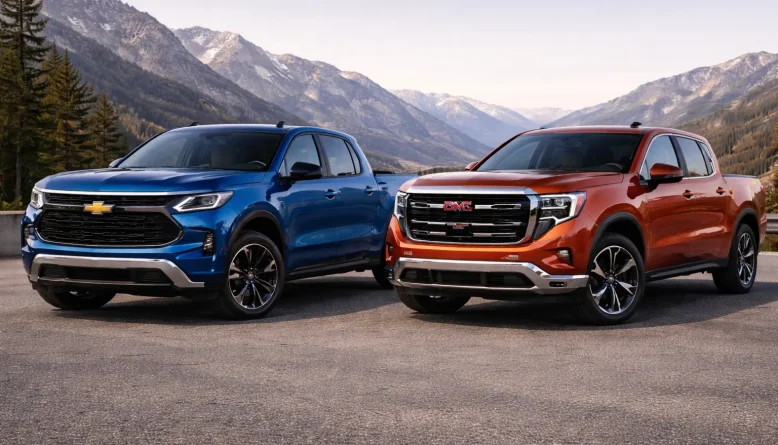
The 2025 Chevrolet Silverado vs GMC Sierra buyer guide addresses a question many full-size pickup buyers face: whether two mechanically similar trucks deliver meaningfully different real-world ownership experiences. Both sit at the center of the global full-size pickup market and share platforms, engines, and core capabilities, yet they diverge in interior execution, trim strategy, pricing logic, and long-term value perception. For serious buyers already cross-shopping alternatives, this comparison matters because these trucks are often purchased for years of work, towing, and daily use, not short-term novelty.
Buyer Context and Market Positioning
Buyers comparing the 2025 Chevrolet Silverado vs GMC Sierra typically want a full-size pickup that can balance daily drivability with real work capability. This is a classic Car A vs Car B decision within the same corporate family, where the choice is less about capability gaps and more about how each truck fits lifestyle, image, and comfort expectations.
The Silverado positions itself as the more utilitarian, value-oriented option with a wide range of trims spanning basic work trucks to near-luxury models. The Sierra targets buyers willing to pay a premium for elevated interior materials, distinctive styling, and a more upscale ownership feel. When asking which should you buy, the answer often depends on whether function-first value or premium presentation matters more.
Pricing, Trims, and Real-World Value
Pricing varies widely depending on configuration, but in general the 2025 Silverado undercuts the 2025 Sierra at comparable equipment levels. Entry-level Silverado trims are positioned aggressively for fleet and work buyers, while the Sierra’s starting trims typically include more standard comfort and design elements at a higher price.
As trims climb, the gap widens. Silverado focuses on offering capability across many price points, while Sierra emphasizes refinement and exclusivity, particularly in higher trims. At similar transaction prices, a Sierra often includes more upscale interior materials and visual differentiation, while a Silverado may offer similar mechanical capability with fewer luxury touches.
Real-world value depends on how the truck is used. Buyers who see their truck as a tool often gravitate toward the Silverado. Buyers who expect daily comfort and premium feel may justify the Sierra’s higher pricing.
Powertrain, Performance, and Efficiency
Powertrain offerings are nearly identical. Both trucks offer a turbocharged four-cylinder as the base engine, multiple V8 options, and a turbo-diesel option in many markets. Transmissions and drivetrains are shared, including rear-wheel drive and available four-wheel drive.
In everyday driving, the turbocharged four-cylinder delivers adequate performance for commuting and light duty, though it feels strained under heavier loads. The V8 options provide strong acceleration, confident highway merging, and relaxed towing performance. The diesel stands out for low-speed torque and highway efficiency, particularly for long-distance towing and frequent hauling.
Real-world efficiency varies significantly by engine choice and use case. The diesel typically offers the best fuel economy in mixed driving, while V8 engines prioritize performance and towing confidence over fuel savings.
Ride Quality, Handling, and Driving Character
Ride quality depends heavily on suspension setup and wheel choice. Both trucks offer a stable, composed ride at highway speeds, with body control that feels confident for vehicles of this size.
The Silverado often feels slightly firmer in lower trims, especially work-oriented configurations. The Sierra, particularly in higher trims, benefits from additional ride isolation and available adaptive suspension systems that improve comfort over rough pavement.
Steering feel is similar in both, tuned for predictability rather than feedback. Neither truck feels agile, but both are easy to place on the road given their size.
Interior Quality, Comfort, and Usability
Interior execution is one of the clearest differentiators. The Silverado’s cabin emphasizes durability and functionality, especially in lower trims. Materials improve significantly as you move up the range, but the design remains straightforward.
The Sierra places more emphasis on visual appeal and material quality. Higher trims offer noticeably more premium surfaces, stitching, and design cohesion. Seat comfort is excellent in both, though the Sierra often feels more refined on long drives.
Control layouts are intuitive in both trucks, with physical buttons for key functions. Cabin noise levels are well managed, though the Sierra maintains a slight advantage in overall isolation.
Infotainment, Technology, and Driver Assistance
Both trucks offer large infotainment displays with modern interfaces and standard smartphone integration on most trims. Responsiveness is strong, and menu structures are easy to learn.
Driver assistance features are widely available, including adaptive cruise control, lane-keeping assistance, and trailer-specific safety aids. In real-world use, these systems perform similarly, as underlying hardware and software are shared.
Technology differences tend to revolve around availability rather than capability, with the Sierra offering advanced features more consistently in higher trims.
Space, Practicality, and Daily Use
Cabin space is generous in both trucks, particularly in crew cab configurations. Rear-seat legroom accommodates adults comfortably, and storage solutions are plentiful.
Bed options and payload ratings overlap closely. Practicality differences are minimal and usually tied to trim-specific features rather than brand identity.
Daily use is similar in both, though higher Sierra trims feel more comfortable when used as personal vehicles rather than work tools.
Safety and Reliability Considerations
Both trucks earn strong safety ratings where evaluated and include comprehensive safety equipment, especially in newer trims. Warranty coverage is similar across both brands.
Reliability expectations are closely aligned due to shared mechanical components. Long-term outcomes depend more on powertrain choice and maintenance than on whether the badge reads Chevrolet or GMC.
Ownership Costs and Long-Term Perspective
Fuel costs vary widely based on engine selection, with diesel options typically offering the best long-term efficiency for high-mileage users. Maintenance costs are consistent with the full-size truck segment.
Depreciation trends often favor GMC slightly, particularly in higher trims, due to brand perception and resale demand. Dealer network coverage is strong for both brands globally.
Verdict: Which Buyer Should Choose Which Car
The 2025 Chevrolet Silverado vs GMC Sierra buyer guide does not point to a universal winner. Buyers who prioritize capability, flexibility, and value across a wide price range will likely find the Silverado better aligned with their needs.
The Sierra suits buyers who want the same mechanical capability wrapped in a more premium package, with higher-end interiors and stronger resale perception. It fits those who use their truck as both a work vehicle and a daily driver.
The better choice depends on whether your ownership priorities lean toward utility or refinement over the long term.

No Responses Yet